
Chester…A Love Story.

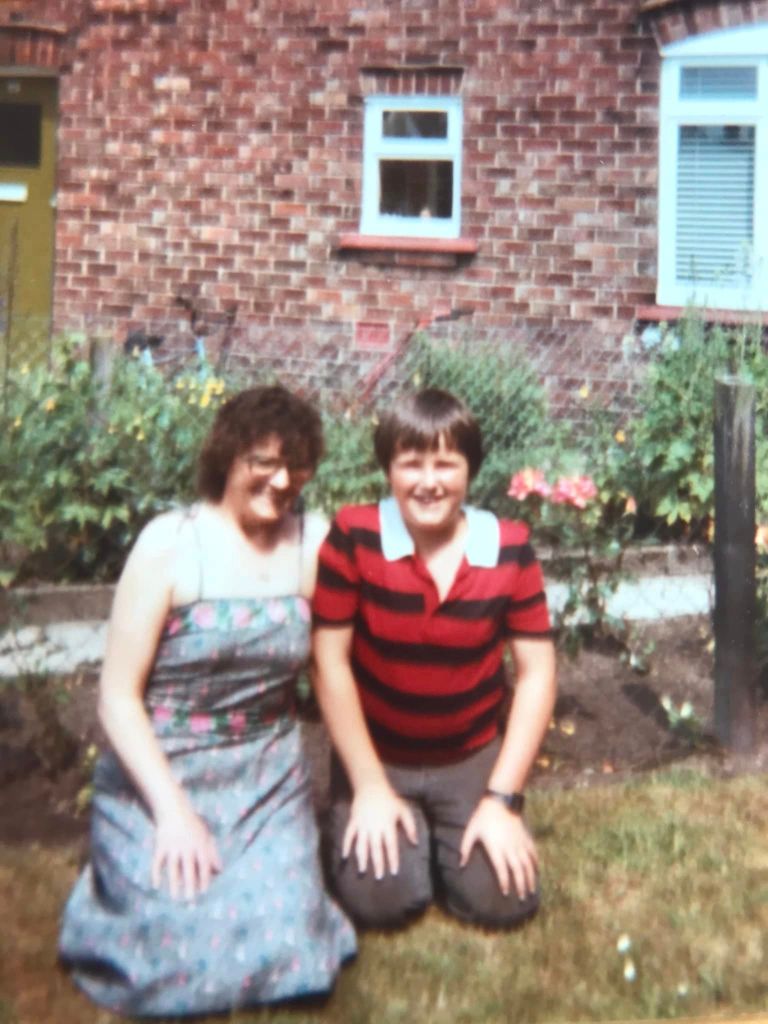
Last Saturday I went to Chester for the first time since my Mum’s funeral. In the build up to this trip I was apprehensive and anxious about how I would react when I was there. The emotions I have been experiencing about my home town over the past year have been so entwined with the loss of Mum that it was almost impossible to differentiate. Every time I see a picture of Chester I think of Mum.

For over 30 years (all of my adult life) visiting Chester has meant visiting Mum, staying in my childhood house, sleeping in my bedroom, eating in our kitchen and sitting with Mum in our front room. This visit would be the second time I had visited with Mum gone. The first time was the day we all said goodbye to her, and I travelled and was with Lisa and the boys throughout. This time was over a year later and solo.

As mentioned the week before my trip was full of anxiety and apprehension. My work week was being and challenging and I found it incredibly difficult to concentrate and stay focused on my work. I was worried that the nearer I got to Chester on the train, the more emotional I would become. I really did not relish being an emotional wreck on a busy train. I was going to Chester to meet up with some old school friends for a meal and a few drinks. I desperately did not want to dominate the evening struggling with my emotions. I was also due to meet Louise (my Sister) as soon as I arrived in Chester. I had visions of myself breaking down in the street and creating a scene. Chester had become such a symbol of my grief that it was on the verge pushing my memory of Mum to the side. I didn’t know how to manage this, so I decided (eventually) to put in practice what I have learned over the years and written about in blogs over the past 4 years. I just allowed these worries and emotions to be. I made no attempt to address them or rationalise them. All I could do is visit Chester spend time with people that are important to me, experience the emotions that I experience and understand what is driving those emotions. I decided to hold it all quite lightly. If I am completely honest I didn’t start doing this until Friday night. By the time I got on the train at Hull Station I was quite relaxed. Quite frankly it was a good job I was feeling zen like as the journey was horrendous with delays and overcrowded trains (apparently this is now normal on our rail network, but that is a story for another blog, probably by another blogger).

I arrived in Chester 30 minutes late, still feeling quite relaxed. I had kept Louise informed of the delays, so we arrived on City Road (the road from Chester Station) and where the venue was where we were due to meet) at the same time. I spotted her paying for her parking and I could feel my emotions starting to bubble. I gave her a hug just about managing to keep myself composed. We arrived at the Corner House Bar and it was packed. A party of about 16 young men dressed as Jockey’s had just arrived, clearly on a stag do. We contemplated going somewhere else, but decided to stay. Louise found a table and I stood at the bar waiting to be served. After some time waiting to be served behind a bunch of pissed up Jockeys I fought my way to our table. And that was it, my composure was lost, for the next 2 hours we were emotional wrecks. In hindsight it was the perfect place to have an emotional conversation as it was so busy, that everyone was absorbed in themselves to notice a middle aged brother and sister crying in the corner. It was lovely to spend some time with Louise and catch up on each others lives and families. We don’t talk as much as we should, but with busy lives and raw grief it is hard and sometimes too painful to pick up the phone.

After saying goodbye to Louise I booked in at the Hotel (conveniently situated on City Road). I had a shower and got changed and went to the pub where we were meeting. I got there really early, as I could not think of anything else to do. I messaged the group to say I was there, and bought myself a pint and waited. I wasn’t waiting long before my old friend Mike arrived. I hadn’t seen him for 30 years! It was wonderful to see him, it was as if we had never been apart. I found it so easy to talk to him, and we naturally fell into conversation about our lives now. Then Adam and Rich arrived, we had another drink and went to the restaurant. I needn’t have worried about getting emotional, the only leakage from my eyes was from laughing so much. The food was OK, the company was outstanding, it was a fantastic night.

The next day I decided to have a walk around the City Centre to acquaint myself with my hometown. I was walked along the canal in to the City Centre it felt incredibly familiar, but at the same time there was no emotional attachment. It didn’t feel like home, it was just a place I know well. I felt quite sad a flat as I walked along the streets in the rain. Chester isn’t my home, it hasn’t been my home for 34 years. In fact it was only my home for 8 years. I know this sounds really twee and hackneyed but home really is where you feel loved and safe, somewhere, where you belong. For 51 years of my life that was wherever my Mum was. More recently that has grown to my own family of Lisa, Ben and Jack. The physical Chester has no place in my heart, the notion of Chester as being where Mum and Dad are from and where our wider family live holds a bigger place in my heart. I was going to write that Chester will always hold fond memories for me, but that is not true. I could not leave Chester quick enough when I was 18, at that time it was full of difficult memories. My fond memories of Chester come from when I visited it as a young child and visiting it as a parent with my young children. Chester is a place I am happy to admire from a distance. I love to look at pictures of Chester, as they make me smile and remind me of my beautiful Mum.

My visit to Chester was full of emotion, some of it painful, but most of it joyful. It has also allowed me to disentangle my emotions about the place and the emotions I have about Mum. Chester is the place where my Mum lived, the love I feel when I see a picture of Chester is not for the place but for the one time inhabitant. Being in Chester does not make me feel any closer to her, in fact it made me feel the opposite. I prefer to keep the memory of Chester as she knew it. Chester the place and the Chester in my mind are very different, the place has no more attachment to Mum, and never will. The Chester in my mind will always be part of Mum. It took this visit to see the difference, now I can visit Chester in the future without worrying about how I will react.

As a Helping Professional how do you guard against losing yourself

Last night I read an advert for an online event by Kristen Neff on Facebook. It was titled Self Compassion for Helping Professionals: Caring for Others Without Losing Yourself. This got me thinking about a conversation I had with a colleague earlier in the day. She is going through a lot of challenges at the moment, both at work and in our home life. At the end of the conversation she said that when life gets challenging she finds comfort in helping others. She is so correct that is exactly what I do, I go into super sensitive rescue mode. When life is challenging it is comforting to immerse yourself in other people’s difficulties, and support them. It answers our narrative of ourselves as being caring compassionate human beings, whilst distracting us from our own troubles.

In truth you are not helping anyone. Our support we give to others is often very directive and short term. When I am in this state of mind I will often go into problem solving mode, seeking to find a solution for the person in front of me. I want to fix them, because if I fix them it will make me feel better. It will give me a sense of control, in a world where I feel increasingly out of control. At best it will work in the short term. The person feels supported, responds well to my problem solving approach and they are very grateful to me, which gives me a warm fuzzy feeling inside. However I have to go back to facing my world, for which I do not have an answer. At worst the person I am helping does not feel heard and becomes frustrated with the advice I am giving them and leaves feeling unsupported, which clearly in turn makes me feel worse.

When I fall into this mode it is so easy to lose myself in this desire to help others in the belief that it will make me feel better and restore me without me having to understand what is happening in my own world. I am pretty certain that this happens to all of us, and not just those of us that work in obvious helping professions, but anyone that provide a service to others. I suppose that can include all of us in one way of another, as we all attend to the needs of other people to a greater or lesser extent.

How do we all then guard against losing ourself?

From my experience it is an incremental process of forming habits of self-care and being prepared to be as compassionate to myself as I am to others. That I would say is incredibly difficult to do, and therefore requires you to form a habit of self-compassion through practice. I started with noticing when I was being self-critical, to be honest I was shocked and continue to be shocked at our unreasonable I am towards myself. Once I was able to be conscious of my thoughts and recognise my inner critic, I could then practice asking myself if I would hold others to the same standard I am holding myself to, in particular my loved ones. If I wouldn’t then could I hold myself to the same standard and offer the same level of compassion to myself as I would to them. This takes time and continual practice. I still slip into extreme self-criticism especially when life is extremely challenging.

Next I took time to get to know what is important to me. I have talked about this a lot and I cannot emphasise the importance of this enough. I use my values as a guide for all the actions I take, this level of awareness has been a gamechanger. Being clear what I value helps me everyday to understand the emotions I am feeling, and therefore help me identify the needs that are not being met that are driving these emotions. If you are not clear what your values are there are a number of exercises available including in a number of blogs I have previously written. I also provide a 1:1 values sessions either as a one off or part of a coaching programme.

Once you are equipped with the ability to be more self-compassionate and be able to be curious about why you think and feel what you think and feel, based on the values you hold, you can then start to make changes in your own life that ensure you remain connected with yourself and therefore be able to connect effectively with others. People then get the real you helping and supporting them in a consistent compassionate way without the baggage of your personal pain.

I offer a programme of coaching called Connected Living which takes you step by step through this process to ensure the habits you start to stick for you. If you want to know more please contact via the platform you accessed this from, or email me via matt@mattycoach71.com

Slowing Our Thinking

To slow our thinking we have to utilise and use our neocortex, and not let ourselves be hijacked by our amygdala’s. But there is a problem…

The neocortex is never going to act faster than the reptilian and mammalian brains. They are designed to react to keep us safe. The problem is they are rather blunt and indiscriminate. Professor Steve Peters bundled them together into the Chimp to describe how they both work to protect us from physical threats and threats to our position in the group. That is a convenient way to describe them, as they are very good at detecting potential threats but no good with the social niceties and context. That is what the neocortex is for.

When we react it is always based on emotion, and that emotion comes from our memories, which are initially interpreted by our Chimp (a combination of the reptilian and mammalian brain) from our memories. Therefore a potential threat is detected by the chimp who refers to the memory bank, there is often something in the memory bank that fits the bill or is similar enough, and then the chimp will detect an emotion attached to that memory, and make a decision to act or not. No reasoning is applied by the chimp. It will either act or not based on the emotion that memory creates. We cannot get around this, this will always happen.

If we want to practice responding rather than reacting, then what we do after we react is crucial.

What is important is that we challenge the memories we hold and the emotions we have attached to them. We often leave our emotions and memories unchecked, as we do not believe we can alter them. This is of course not true. We alter our memories all of the time to fit our narrative, our view of the world. We know we can shift our view of the world, and therefore our narrative about what is going on, so it is inevitable that we will view some of our emotions differently. If we view our emotions differently, how we react or respond to new events will be different.

When I was working as a Charge Nurse (Ward Manager) and for some of the time working as a Nurse Educator, I would dread going into work, I would feel anxious about the day ahead, I lived in fear everyday of being criticised and talked about. That feeling of anxiety for a long time would stay with me all day. It still comes and goes now, especially in the morning just before I go to work.

What I needed to do was to make sense of the emotions I was feeling, and as Steve Peters suggests, replace those Gremlins I had about work with Autopilots. Now I started doing this after I had left my role as a Charge Nurse and was working as a Nurse Educator, so I was now removed from the events that caused me the most pain, but I was still feeling the after effects. I was still seeing the people and working in the same environment, and was therefore still worried that I would experience them again.

What I started to do was to write down what was happening to me when I started to feel anxious. I would write it all down in what Brene Brown called my “first shitty draft”. I would get it all out then look at it after I had written it all down. I could then start making sense of what I had written.

To start making sense of what I have written I ask myself the following questions:

  • What assumptions am I making about the situation? Start by looking for facts in what you have written. Underline them all, then go back through them, and just ask yourself is that really a fact or are you just assuming it is a fact? Our assumptions come from our memory banks. As I said previously both our reptilian and mammalian minds use our memory banks to help them assess the threat level of what is being presented to us. They will look for anything that is remotely similar then our minds will if unchecked make an assumption based on previous evidence. The issue is with our memory bank is firstly what I mentioned before, our memory makes stuff up, and secondly it chooses similar situations like Spotify chooses what you should listen to next. Sometimes it is spot on and other times it is very wide of the mark. So always check your assumptions as often your emotional response is based on faulty out of date information.
  • The next question I will ask myself is how accountable am I for the situation I am in. In other words what part did I play in this mess? We will often if unchecked look for people or situations to blame for what has gone wrong. It is after all easier than facing up to the part we have played. Populist Governments and right wing racist movements have been making an artform of blaming groups of people and races for the ills of society. We see it every day in the press and on social media, like stories of immigrant’s taking jobs, and scrounging off the state in the UK and USA to name only 2. The UK has Brexit and the USA has the wall. Being bombarded with that kind of rhetoric makes it much easier to look for external influences when things happen in our lives, rather than looking closer to home.
  • The next question to ask is what part did other people play in what is happening? Was the part they played helpful or unhelpful. Were they active or passive participants? What do I not know about the part they played? Remember those assumptions. Our minds are masters in projecting and attributing behaviours to people that are possibly less than accurate. What facts do you have about the part they played? Again ask yourself are those facts really facts or are you just making assumptions?
  • The last question I ask myself is, is this situation within my control (can I change it)? If I can what do I need to do to change my emotions about this situation? Some times that will just be a mind-set shift, and sometimes I need to take action. If action is needed, it is vital to turn those thoughts into action. This leads to some supplementary questions.
    • What specifically am I going to do?
    • When will I do it?
    • How will I know I have achieved what I wanted to do?

Now all of this might feel a bit stilted at first but that is the reason for starting off writing those “first shitty drafts” at first to practice these responses. You can then start training your mind to pause when a response is required, and not jump in with an emotional reaction. This will take time and there will be many times that you will jump to an emotional reaction when a more reasoned response would be more appropriate. Don’t beat yourself up over that, it is after all how your mind has been operating for most of your life. What is important is that you recognise when you have reacted when a response may have been more appropriate and use the process above. The act of practicing converts those gremlins to autopilots, by putting the notion of an alternative view in the memory bank, allowing your reptilian mind to concentrate on real threats to your life and limb, and managing the reactions instigated by your mammalian mind to be more limited and less widespread.

What we don’t want to do is to kill off those gut feelings we have. Those feelings that let us know when either something is wrong or something is right. It is what we do with this visceral sensation that is so vital, do we go with the instant reaction stemming from our reptilian and mammalian minds or do we quieten them down to allow our neocortex to give a more reasoned and considered response. Now some of us will find it easier to have a more considered response than others, which is something we will consider later in this book when we look at behavioural preferences. 

The Story of My Persona

Are you an introvert or extrovert?

Are you most comfortable as an extrovert or as an introvert, or does it depend on what you are doing and who you are with?

Are you chatty or more the quiet type?

Do you prefer to watch from the side-lines or are you more comfortable in the thick of it getting stuck in?

Do you look within yourself for inspiration or do you prefer to surround yourself with friends or colleagues to find your creativity?

Do you relish those intimate one to one moments with friends or do you love those occasions with all your friends and family present?

Do you like to blend in to the background or do you love to stand out in the crowd?

Do you think to speak or do you speak to think?

Do you like to reflect before you act or are you more prone to rushing in to action?

Now if you are anything like me you will relate to some of the introvert traits and some of the extrovert traits. For some of the statements you might not have an opinion either way. We are after all complex and interesting human beings, none of us can be put in a box.

You may have noticed however that you answered more one way than the other.

In all parts of my life I have a tendency towards introversion. I prefer to email someone rather than speak to them on the phone, especially when I do not know them very well. If I am in a shop and I cannot find what I have gone in for I would rather walk out of the shop empty handed rather than ask a shop assistant. When I have a difficult problem I need to solve, I will prefer to do this alone and work through my problem carefully, I will then share my plan once I am happy with it. On the flip side I love teaching groups of people and I love talking in large groups, I often relish being the centre of attention on some occasions and hate the thought of it on others. When I worked on the wards I had no problem talking to complete strangers and striking up a rapport with them. When I am teaching and talking to large groups of people I am Matt Smith the Educator or Matt Smith the Coaching Lead. When I am blending into the background I am being Matt Smith, just plain old Matt Smith, the father, husband, son, blogger and coach. Saying that my extroverted traits do you show up in my latter persona as well as my professional persona, and the same is true for my introversion. Jung described humans as having different personas for different occasions. So crudely speaking I have my Professional persona as an Organisational Development Practitioner and Coaching Lead and a persona as a Father, a persona as a Husband, Son, Coach, Blogger and Friend. Most of these persona’s no doubt are very similar, as yours will be, otherwise it would could get very confusing trying to work out what version of a person we are speaking to, let alone how exhausting it would be to keep up all these multiple characters all of the time.

As well describing your attitude (introversion and extroversion) Carl Jung, suggests there are 2 aspects of our decision making. He proposed that we either make decisions based on our thinking or our feelings. As with our attitude they are not mutually exclusive, therefore we can and do use both traits, but not at the same time. We do however prefer to make decisions either one way or another. Again to help you understand your preferred behaviour I have put together a series of questions below:

Do you consider yourself to be formal in your interactions with people or are you much more informal when greeting people?

Do you remember facts and figures more easily than names and faces or do facts and figures leave you cold?

Do you like to analyse a problem before you plan to correct it, or do you get stuck in and use a kind of trial and error approach?

When faced with an issue do you look at it with a subjective or objective eye?

Once you have decided on a direction of travel do you stick to that route or do you see where the road takes you?

Do you relish competition and strive to come out top, or are you more interested in taking part and helping others to succeed?

Is it important to you to have a tidy desk, is it important that everything has its place and is in it, or do you not really care whether you desk is tidy or not, or where things are kept?

Do you choose your work or task above spending time with friends or family, or do you insist on finishing work on time to ensure you spend quality time with your friends and family?

Again if you are anything like me you will be able to relate to some traits for both thinking and feeling decision making. I must admit my preferred route to making decisions is based on what I feel rather than thinking things through. When faced with important decisions however, I will rely more on thinking than feelings. When I am writing or reviewing guidelines I will spend time collecting data and make sure I have all the information I need before I start writing, sometimes to the point where it takes me such a long time to get things done. However in every other aspect of my life I make decisions based on how they make me feel and how they may make others feel. I will often base my decision making on my values, if they are congruent with my values, for me it is the right decision. You may think that you base decisions on either analysis of data or on what you feel, but they may have their basis in the opposite. To examine where your decision making is routed it is worth exploring your values. What you value will unearth your preference.

Below is a picture, I would like to invite you to write down what is there for you in this picture.

The words you have written may well help you understand whether you prefer to perceive the world using sensation or intuition. If you use sensation you may well have written;

Girl

Horse

Grass

Red Dress

Trees

Hat

If you use intuition you may well have written;

Friendship

Summer

Adventure

Kindness

Happiness

Warm

Again as with all the other preferences you may well have written a mixture of the 2, however it may have come easier to come up with words for either sensation or intuition. So we can perceive the world using both preferences but find it more comfortable using one or the other. I will normally want to go straight for intuitive descriptions of the world around me and have to concentrate on seeing what is really there.

If you prefer to use intuition you are more likely to be future focussed and feel comfortable projecting and predicting what is coming next. You feel at ease when planning for the future. You are happy using your imagination and when you are with others that like to use intuition you can get carried away. Using intuition is very useful when planning for the future and creating a compelling vision.

If you prefer to use sensation you are more grounded in the here and now and feel much more comfortable describing the current state. You are comfortable highlighting what is right and wrong with the current environment. Sensation is vital to ensure that any future plans are routed in the reality of what is really happening.

It is important to remember again that you can use both intuition and sensation and that you don’t hide behind your preference when things do not work out as planned. I keep repeating this, but it is so important, we are complex and are full of contradictions. We can be introverted and extroverted, a thinker and a feeling, a sensor and intuitive. We may prefer to behave differently in different situations. It is vital to recognise this and embrace our own complexity and that of others.

A week of talking about listening, and listening

If only we spent more time listening, and I mean really listening then maybe the world would be a much better place. We all think we a good at listening, but most of us are very poor at it. We spend our time listening to respond. We start with good intentions to listen to what someone has to say about a subject or to listen to a question. As soon as they start speaking we start making judgements on what they are saying, we then stop listening and start formulating our response. In fact most of the time we have made a judgement about the person and what they are about to say even before they have opened their mouth. Really listening is difficult and takes practice. I find myself regularly falling into this trap of listening to respond or judge. My intentions are often honourable, as I want to help someone, so when they start telling me their story I get this strong urge to look for a solution for them. I completely disregard their experience and story and will often stop listening altogether while I explore my memory banks looking for a solution for them. For a coach this is a terrible admission. I know! When I am coaching or having a professional conversation with someone I consciously prepare myself before I start being very mindful of this urge I have. As mentioned earlier being able to listen well or as Nancy Kline would put it; listen with fascination, requires learning how to prepare for and conduct a conversation as well as practice.

So this week I have been working with senior health professionals to enhance their listening skills. Now most health professionals worth their salt are very effective communicators, however there is always room to learn more and improve. In my experience they are excellent listeners when it comes to working with their patients. This is often more intuitive than intentional and most would struggle to describe what they really do to make their listening so effective. What I have also noticed is that this listening skill is rarely transferrable to their colleagues and direct reports.

On Monday I was working with a group of Senior Nurses, in fact Monday was day 2 of a 3 day leadership development programme I had developed for them. Day 2 was how to conduct coaching style conversations when working with teams. Having a coaching style conversation is all about listening effectively to help a member of staff gather together all the information they possess about a particular issues they are facing then helping them assess this information and support them with create a plan to address this issue, whilst resisting the urge to take over and solve their issue with the incomplete or irrelevant information you have. It was a wonderful day with lots of laughter and meaty conversations. We always end the day in groups of 3 listening to each other in turn and experiencing how it feels to be listened to with fascination. I love working with Nurses, it is always good fun, but I was exhausted afterwards. They do like to talk so they take a bit of corralling to make sure we get through the content we need to.

Wednesday was day 3 of Clinical Supervision training. We offer this training to Nurses and AHPs to develop the skills required to be an effective Clinical Supervisor. These skills involve effective listening. Day 3 is a consolidation of the skills where we talk about the pitfalls we can fall into when conducting clinical supervision. The majority of the pitfalls we discussed involved the difficulty with truly listening, and not being distracted by our own thoughts as we start to listen to judge and respond. We talked about preparation and the importance of getting our head in the right place. We discussed using mindful techniques to practice letting go of our thoughts and keeping ourselves in the moment. We finished the day with a group clinical supervision session where everyone brought an agenda item they would like to discuss, and the group would decide which agenda item to start with. I would then ask some opening questions to start the process and then invite other members of the group to ask questions and get curious to help the member with the issue unearth all the information about the issue and then help them use this information to explore potential solutions. This was a great practice to get them noticing how strong the urge is to listen to judge and respond rather than to understand.

On Friday I was the one listening with fascination when I was coaching. Before the coaching session I warmed up by spending a few moments being mindful, practicing letting go of any thoughts that came into my head whilst focussing on an object in this case my mobile phone. I held my phone in my hand focussing on it’s weight and how it feels in my hands. Inevitably I was distracted by a thought, and each time I noticed my attention being taken away from the phone, I would reset my focus back to the phone and let go of the thought. This helps me during the session to concentrate my focus on my coachee and listen to the information they are giving me and therefore ask questions that provide more information to help them see what actions maybe helpful for them.

As I mentioned earlier I don’t always get it right and there are times when I do not listen with fascination, this is often when I have been listening all day to people that require my attention professionally. Therefore it can be times when people need me to listen to them personally where I can fall short. It is vital to make space for both. This requires us to take care of ourselves to make sure we have enough energy to listen to all the important people in our lives. In my blog Find comfort at both home and work by creating and managing your personal boundaries I explore how we can make sure we give both home and work the attention they deserve.

If you want to know more about how you can listen to understand rather than to respond please get in touch via social media or email matt@mattycoach71.com

Reflecting on the day I left home 34 years ago

Yesterday I wrote a short blog offering myself as a coach for parents and young adults that are maybe struggling to navigate the transition from childhood to adulthood. I hadn’t planned to write that particular blog when I got up yesterday, I planned to write some more about career coaching and the milestones in our lives when we assess our careers. But instead I started to consider the difficulties young people and their parents face when teenagers move in to adulthood. When I reflected on this decision it was obvious why. On the 1st October 1989 I left home to start my Nurse training. Since Friday this has been praying on my mind. It has seriously affected my state of mind and had clearly influenced the decisions I was making. With that in mind I thought I would share with you my memories of those few days and try and make sense why this year of all years this event has had such an impact on me.

Clearly this took place 34 years ago so my memory of the exact events will be very patchy. However what is clear is the memory of how I felt and how Mum felt (having had many conversations about that day over the years).

I didn’t have to much to pack, my clothes, radio cassette player, my music collection, a few books and a food hamper put together by Mum. My cousin Rachel drove us to Hull. Mum was in the front seat next to Rachel and I was on the backseat with my belongings, and a list of directions to get to Hull. I had written the directions from a road atlas. I remember being more tense about getting the directions right than leaving home as we drove along the M56 towards Manchester. As it turned out I could have done with being more alert to my surroundings, as we missed the turning on to the M6 North and ended up in Manchester. After being lost in Manchester for about an hour we eventually got on to the M62 straight to Hull. I remember nothing of the rest of the journey until we were on Clive Sullivan Way (A63), which is the main dual carriageway into Hull. I remember seeing the Humber Bridge and my nerves starting to take hold. Then we turned on to Rawlings Way and Hull Royal Infirmary came into view, where I would be living, working and learning. My stomach started doing somersaults. Once we arrived I was given my keys and room number (Room 914). I was on the 9th floor. Opening the door of my room was a big shock for me and Mum. The room seemed tiny and so basic. I had a sink a wardrobe a table a chair and a bed. the kitchen was down the corridor as was the shared bathroom. Everything seemed so dated and soulless. I really wanted to go home, but I knew that was not an option so I kept my thoughts to myself. Before Mum and Rachel left we walked into Hull City Centre and had Sunday lunch in Burger King.

When I was saying goodbye to Mum I tried my hardest not to cry, I could see Mum was trying her hardest not to upset me and cry. I will never forget that hug we gave each other in the carpark outside the staff residence at HRI. Neither of us wanted to let go. Mum told me years later that she cried for the whole journey home. She said it felt like having having her arm cut off. When they had gone I bumped in to a few other people on my course, I think it was Cathy, Anna and Jo. We had a quick chat and agreed to meet later to go exploring. I then went straight to my room and sobbed into my bed. I wasn’t sure I was ready to be an adult.

I really struggled for the next 3 months. Every night I would cry myself to sleep. I realised I was woefully under equipped for leaving home. I had no idea how to cook, I couldn’t use a washing machine and had no idea how to iron. Thankfully despite being shy I was good at making friends and if it wasn’t for my neighbour Anita (who is sadly no longer with us), Omar, Vicky, Sam and Sonia, I think I may have not managed to get through those first few months.

As I reflect on that first year of training I started to grow into being an adult, I met my best friend Julian (we talk still every week) and made some wonderful friends and memories.

Yesterday I felt really out of sorts and was short tempered and quite tearful. Reflecting on transitions and milestones in life has made me realise that I am going through another transition in my life. Our children have grown up, Jack has moved back home. and it has been a year since Mum died. I am moving into the next chapter in my life. From a work and life perspective I have less time in front of me than I do behind me.

I have no doubt been in transition since Mum died, just like the transition I started 34 years ago today. This transition period is unsettling and uncertain, but exciting at the same time. The difference is that I don’t have a full life in front of me. If I am lucky I have another 15 years of work (that would make me 67). The choices I make workwise hold more importance as I have less time fill. It makes me realise that making value based decisions is vital to ensure the actions you take meet your needs.

If you have waved goodbye to child recently, you will recognise that hug that you never want to end. This transition is painful, the fruits of this pain are worth it. They are even sweeter if we give our children the space to make decisions that are based on what they value.

If this blog has sparked a thought and you want to explore it further please get in touch.

Becoming an Adult: Empowering Young Adults to Build Confidence and Independence

How we all move into adulthood is not uniform. It is not just turning 18, being able to vote or legally being able to buy alcohol. I remember Ben saying to me after his graduation at the age of 22…”that’s it now Dad, I am an adult. No more student loan and full-time education, I have to find my own way now.” He had been living away from home for 3 years by this point, but in his mind graduating from University was the turning point for him. He as he said, now had to find his own way. There are others who will see the transition to adulthood happening when they become 18 and no longer have to undertake education and get a job. For some it is leaving home. My youngest son Jack left home to go to University and now he has graduated he has come home. His transition to adulthood is very different from his older brother who never came home. Both have their challenges. Ben has complete independence and is able to make decisions both helpful and unhelpful without the well meaning interference of his parents. However the financial burden of living independently is extremely challenging at the moment. Jack has less of a financial burden living at home, his challenge however is learning to live in a house with his parents as an adult.

As a work-life balance coach I work with parents and/or young people to support the family attend to the challenges they face, and that includes when children are getting ready to become adults.

Becoming an Adult

I know legally there is a moment when we become an adult, the day of your 18th birthday. As mentioned earlier though rarely is that the day that you become an adult in your behaviours, and attitudes and beliefs. That is much more a slow burn, and often a painful angst ridden one. It starts in our early teens as we push boundaries and experiment with seemingly adult decisions. I wasn’t very rebellious as a child but I do remember sneaking a cigarette from my mum’s packet of Regal King Size , then finally graduating to buying my own, and stealing cans of Heineken at family parties with my cousins, to eventually moving on to underage drinking in pubs. It is all very exciting and makes us feel all grown up. We eventually start to push back and reject some of the rules imposed by our parents and sometimes society and we start to forge our adult identity. Essentially though we are still children and very dependant on our parents to make important decisions and sustain us. As we get older the transition becomes complicated and we all have different experiences depending on the choices we make as young people and the choices our families make. Some of us will start work at the 16 or 18 others will go onto higher education. Some of us move smoothly to adulthood, others less so. It just depends on our personality, our values and how our families operate.

What my coaching will do for your teenager

When we have finished working together they will be clear what is important to them(what their core values are) Why is this important? Being clear on what their core values are helps them make decisions and plans that are true to them and are not influenced by what they think they should do but what they truly believe is important.

They will also have a clear idea of how they view the world and what motivates them, this will give them confidence to navigate the transition to adulthood that is responsive to their personal circumstances.

My approach uses the following steps:

  • Connecting with who they are and the stories they use to describe themselves
  • Identify what they value
  • Understand the reality of their current circumstances
  • Identify what is helpful and unhelpful in what they are currently doing
  • Letting go of their unhelpful behaviours, thoughts and beliefs
  • Plan actions that meet their values

I cannot guarantee that your child will command a 6 figure salary, but I can guarantee that they will understand themselves much better and be able to confidently become an independent adult.

In summary moving into adulthood is rarely straightforward and the same for everyone. We all experience it in different ways. My values based approach to coaching young adults allows them to understand what makes them tick, and what they value. This insight gives them the tools to navigate this transition in a way that meets their needs.

If you or your child would like to know more please get in touch either by email (matt@mattycoach71.com) or direct message me through the social media platform that you used to access this blog.

Ready to Find Your Path? Discover Career Coaching for Young Adults!

Are you a young adult between the ages of 18-25 feeling overwhelmed by the pressure to choose your career path? Don’t worry; you’re not alone!

Introducing Value-Based Career Coaching

Are you struggling to find your career direction? Want to align your values with your professional goals? Dream of a fulfilling and purpose-driven future?

Look no further! Our career coaching program is designed just for YOU!

What I Offer

Personalised Guidance: Our expert coaches will work closely with you to uncover your true values and passions. We believe that knowing what truly matters to you is the key to a successful and fulfilling career.

Direction & Clarity: Say goodbye to career confusion! We’ll help you explore different career paths that align with your values and interests, providing you with the clarity you need to make informed decisions.

Goal Setting: We’ll assist you in setting achievable goals and creating a step-by-step plan to reach them. Your dream career is closer than you think!

Confidence Boost: Gain the confidence to pursue your passion and live a life that aligns with your values. Our coaching will empower you to take charge of your future.

Your Dream Career Awaits!

Don’t let indecision hold you back. Embrace your potential and embark on a fulfilling career journey that aligns with YOUR values.

Ready to take the first step?

Contact us today to schedule your FREE consultation. Let’s build your future together!

Email: matt@mattycoach71.com

Don’t let uncertainty define your path. It’s time to discover the career that truly resonates with you. #CareerCoaching #FindYourPath #ValueDrivenCareer #YouthEmpowerment

Find comfort at both home and work by creating and managing your personal boundaries

Creating and managing personal boundaries while navigating the conflicting demands of work and family life is a common challenge faced by many of us. Balancing these two crucial aspects of life can be stressful, but with the right strategies and mindset, it is possible to find harmony.

The challenge is real and messy

We have to face the reality that balancing the many demands that are put on us is complex, messy and filled with emotion. The first step is to accept this and understand and appreciate why this is the case. Success at work and at home are hugely important to you. Your values are telling you this so spending more time paying attention on one at the expense of the other induces feelings of guilt and shame. This is normal fighting these emotions just creates more feelings of the same and greater tension as we end up making promises we cannot keep as we try to appease both parties. Once we accept that both are important and we understand why they evoke such strong emotions in us, we can stop creating a competition in our minds where one has to win out over the other. We can start to create a space where both can co-exist as essential interdependent parts of your life.

Set clear priorities

To set clear priorities it is important to be very clear what your core values are. If you are a regular reader of my blogs you will know the importance I place on understanding our values. To help identify your values first download Brene Brown’s values list, this will help you identify your values without trying to come up with a list by yourself. What you need to do now is to reduce this list to values that you relate to. Read through the list and pick 10 values that you relate to. Try to avoid aspirational values, just values that you think are personally important. Once you have your ten you now need to reduce this down to 3 core values. Three values that really resonate with you. Values that move you in to action, motivate you, describe who you are and are just non-negotiable. Take your time if you have two words that are similar say them both out loud. How do they make you feel, if you get an emotional response to one more than the other pick that value.

Once you are clear what your core values are you can use them as a barometer to start to prioritise aspects of your work and home life. So you can make decisions when one has to take precedence over the other to meet your values. Once you are able to make a value based decision on what you are going to do, you are then able to articulate your reasons for making that decision to those around you, reducing your feelings of shame.

Create clear boundaries

There is a comfort in having clear well signposted boundaries that are steeped in your values. The easiest way to do this is to create routines that separates work from home, clearly this is especially essential when working from home and even more so if you like me do a mixture of both. It is all too easy to start to allow work to leak in to your home time and the demands of home time to encroach on work. Working flexibly can be a double edged sword without clear boundaries being set that everybody agrees and understands. Things to consider are designated work spaces, allocated time as a routine to allow for exceptions to be negotiated rather than leaving it to chance. It is also worth considering transition routines. How do you transit from work mode to home mode and vice versa. This might be a physical commute, it might be closing the door of the home office, putting away the laptop or the tools of your work, opening the door, the getting out of the tools of the trade. Consider the clothes you wear. Is there are change of clothes between the two roles? Even when working from home I will wear my work clothes to get me into work mode. Changing out of your work clothes when work is done can also help you transit back into being back home.

How are you communicating what you require

If you keep all of these thought processes about creating this balance in your life to yourself, you will create confusion and resentment. Talk about what is important to you about both home and work with the people that are important to you at home and work. Once we have set our routines and boundaries, how are you going to articulate these to those that need to know? This is vital to manage everyone’s expectations. We all know that routines and boundaries will be tested and there will always be times where there will be exceptions. If you need to enter into negotiations about exceptions with family or work, they need to be clear what your boundaries are and what the reasons are for the exceptions. It might be that a particular emergency requires you to stay at work longer or make contact with work after your normal work day has finished, or attending your child’s school play means you will need to take some time off during the day. If communication is unclear or limited these events can cause frustration and tension. There will always be tensions between the two demands on your life, clear, honest and regular communication that is value based is essential to reduce tension and allow both demands to co-exist.

Don’t be a martyr

You don’t have to everything. The people around you are just as capable and can share the burden with you. You may have a tendency to sit on our own personal drama triangle equally spending time as a rescuer doing everything yourself and making sure everyone else at home and work are attended to. Then being the victim and feeling exploited and put upon by all around you. To then becoming a persecutor and blaming those around you for your difficult life. Take a breath take a step back and ask yourself who can help. Do I have to stay at work and do this or can I share the workload with my team or colleagues? Do I need to acknowledge that I need help to complete this task. At home do I have to take on all the domestic duties, can we share the workload so we can spend more valuable time together. Can extended family or friends help with childcare in the short term so I do not have to take more time off work. Remember you are not an island.

Don’t forget yourself

In the hustle and bustle of life it is easy to lose sight of ourselves and not spend time caring for ourselves. I have a very simple rule that works well. I allocate myself an hour of happiness everyday. I don’t have to do it all in one go, sometimes this hour might be made up of a couple of minutes here and 10 minutes there. I categorise happiness as any activity that gives me a sense of satisfaction, joy, pride, or just makes me smile. At the end of everyday I do an inventory of all the moments of happiness I have had during the day. This approach creates an intentionality of self-care that you might otherwise take for granted. When we take our happiness for granted it is easy not to notice when we start to sacrifice our own happiness. By making sure we have an hour of happiness we start to prioritise activities that contribute to this.

It is not about winning the game it is about staying in it

To quote Simon Sinek, we don’t win at life, we live it. Creating a balance between work and home is part of living our life. Achieving a balance between the 2 is not a final destination it is a process that requires maintenance. There is no first prize in winning at life and there is no prize for finishing first in the work-life balance race. We have to work at making sure we don’t sacrifice one for the other. Once we have a formula that helps us create a meaningful balance it requires tweaking to make sure that balance remains as our life changes and demands shift. The approach you used 10 years ago to maintain balance may not have the same effect a decade later. Agility and flexibility are essential, having a growth mindset and always looking to improve how you work and relax is the to key maintaining that balance.

Get help and support if when you need it

If you have a demanding job and a loving family creating a space where home and work can co-exist and draw strength from each other can be daunting. You don’t have to do this alone working with a coach like myself can help you create the foundations that will increase your chances of success.

If you are interested in starting a coaching relationship get in touch via email matt@mattycoach71.com or by direct messaging me through my social media pages.

Don’t forget you are enough.

Finding Balance: Empowering Working Parents

Are you a working parent aged 30 to 45, juggling the demands of a successful career and a fulfilling family life? It’s time to reclaim your balance, your life, and your dreams!

As a working professional mother/father, you’re a superhero. But it’s okay to admit that sometimes even superheroes need a little help. .

Imagine a life where you can excel at work without sacrificing precious moments with your family. My coaching focuses on:

Time Management: Learn to make the most of your time, so you can be efficient at work and fully present at home.

Self-Care: Prioritize self-care without feeling guilty. It’s not selfish; it’s self-preservation.

Mindfulness: Find peace in the chaos of daily life. Mindfulness techniques will help you stay centred.

Goal Setting: Set achievable goals and watch your personal and professional life flourish.

Supportive Community: Join a community of like-minded working mums and dads who understand your journey.

Ready to take the first step towards a balanced, fulfilling life? Contact me for a free consultation. Let’s unlock your potential and redefine success on your terms.

DM me to learn more. Together, we’ll create the life you’ve always dreamed of!