Courage

I have written this opening sentence about 10 times and deleted it this morning. I just cannot decide what to write. I did contemplate not writing anything this week, as I didn’t think I had anything to say that was new. I am still not sure if I have anything to write. These blogs are rarely structured, I much prefer to use a free writing approach. The problem is with this approach is that it can take a little of bit of time getting going and my opening paragraphs can ramble a bit as I tried to find a thread to get hold of. I have an idea I want to discuss courage today. Courage as some of you will know is one of my core values. About a month ago I had a 1:1 with my manager and I decided it would be useful to revisit my values. As I have changed roles in recent months it is time to reflect on what my sense of purpose is and reconnect with it. It is very easy when you are busy getting to know a new way of working at the same time as maintaining business as usual it is easy to lose sight of what is important to you and why you do your job.

I have been using these blogs to help me with this process. Free writing gives me the time and space to reflect on work and the impact this is having on me. It will however only get me so far. It is important to have a reflective, restorative conversation with someone, it helps me discover parts of my experience I might not be paying attention to and tests my narrative of myself. I am very lucky that my manager has a very reflective approach to our 1:1s which is massively helpful. I also have a wonderful friend Janis, who has been my mentor and supervisor for a decade now. She has an unnerving ability to look into my soul, and she never lets me off the hook. This week we met up and discussed my new role, how it is making me feel and how my values play a part in my successes and how I can use them to my advantage when I face challenges.

During our discussion it became very clear to me that my 2 core values have not changed, they may however shifted in focus. These values are Usefulness and Courage. I remember when I first identified them and put a name to them Usefulness was the value I focussed on. It was the touchstone for me, I would always ask myself…”is what I am doing useful”. Over the past couple of years I had stopped paying as much attention to my values as I probably should have. They were still at play in my life and were still letting me know how I was doing by either making me feel good about what I was doing or uncomfortable, but I was not always paying attention to the message they were giving me. As I reflected during our catch up, I recognised that having courage has become the focus of my values, and whether I am being courageous or not has become my guide for how I work. When I have shied away from situations and not used the skills I have, or when I have just gone with the majority I have felt inauthentic and generally these situations have got worse, but when I have shown courage and done the right thing or backed my own skill and ability, it has gone well and I have felt good.

The value of courage for me is having confidence in what I can do, showing up and doing it even though I am fearful of what people will think or whether it will work or not. In other words courage is doing something that holds a personal risk and doing it anyway. When I say personal risk, I am not sure I would do this if it was a physical risk, the value I place on courage is doing something in the face of psychological risk.

That whole reflective process has been incredibly helpful, reconnecting with Courage and Usefulness has been really helpful, to do an inventory of events and progress since starting my new role and notice when I have been consistent with my values and when I have not. I feel so much better, there is something reassuring about having that touchstone to help me notice when I am straying away from my values and when I am staying on my path.

Have a good week everyone.

We all need to be heard, really heard!

I don’t often do 2 blogs, 2 days in a row, but today’s blog is less personal, what I want to talk about today is how we communicate more effectively, by talking less and listening more.

Most of us think that we listen well but I would suggest most of do not. I have written about the importance of listening many times before and always say that we must listen to understand rather than listening to respond. It sounds really easy and we all intend to listen to understand and then almost immediately we get fully involved in the subject and start listening to respond, which essentially means we have stopped listening. It is so important to listen to the person rather than the subject you think they are talking about, and we can only do this if we listen to understand. It is difficult because we spend most of time in content, in other words we spend most of our days assessing, evaluating against past, and planning for the future. So when someone wants to talk to us about something important, that they need to do some thinking about, we continue to operate in content and start to assess and problem solve what they are saying. I know a lot of you will be reading this and saying…”well yes of course we would they have asked for our help to solve the problem they face”. It does feel natural to get stuck in with them and solve their problem. The issue with this approach is that we hear the headline of the issue and immediately go to work solving the problem. If that was the problem though, they probably would have solved it already. They have decided to ask for your input because the problem is not easily solved. The root of any issue or problem rarely sits on the surface and easily accessible. What the other person needs is a different perspective, by listening to understand we keep our distance and get a view of the overall problem where it sits in their world. When we listen to respond we get stuck into the surface story and get right next to them narrowing our perspective.

To listen effectively it is important to spend our time out of content mode and in observing mode/receiving mode, where we just take in the sights and sounds. Listen to the story they are telling you, and when you get to a bit of the story that you don’t fully understand ask questions that gives you more understanding. If you are curious about the characters or the places you hear about ask about them. Help them paint the picture of the problem they are facing. Notice the emotions the person is experiencing and acknowledge them. This approach always takes a little longer than just plain advice but it works so much better. Let them take you on a tour of the issue/issues they are facing, get curious about the bits they gloss over, and avoid relating it to your world and solving their problem in your world.

You will notice that you will drift back into content mode and either relate it to a part of your world or want to ask them questions to steer them in a direction that takes them to a solution you think would be satisfactory. Once you notice that you are stopping listening and starting to solve, let that thought go and re-focus on what they are telling you. When I am having a conversation at work with anyone, I have started to intentionally employ this approach and it works incredibly well, I have noticed that I enjoy even challenging/important conversations much more than I have in the past, as I don’t feel the pressure to solve the problem. I am there to help them examine the problem and for them to find the answer that is most helpful for them, and sometimes that is not finding a solution right now.

The difficulty with listening to understand is that it requires bandwidth, the narrower our bandwidth the harder it is to stay out of content. There are just too many intrusive thoughts passing through our mind, so we stop listening and move into solution mode or become dismissive of the problem the pales in comparison to the issues we perceive we are facing. As with anything in life it is vital to make sure you are heard and have someone that will listen to understand when you speak. In my previous blogs I have written about how easy it is for our bandwidth to narrow and as a consequence become less responsive and supportive of those around us. It is important that we all play our part in maintaining our own and others bandwidth by being open to receiving support and being a good and I am mean a really good listener for those around us.

Take care everyone.

I have found something I didn’t realise I had lost

I normally write my blogs when I get up on a Saturday morning. When I was in the groove a few years ago, it was my Saturday morning routine. During the pandemic at one point it was a daily routine. I found it incredibly helpful in managing my well-being. More recently I lost that routine until 4 weeks ago when I started again. 4 weeks ago I felt lost, I was worried that I was becoming depressed again. My bandwidth was narrow and there was just too much happening. I decided to try writing again, to see if would start to improve my well-being. In the short term after my first blog, it did I got some lovely feedback and my ego was certainly massaged, it felt good to be appreciated. That feeling didn’t last, I didn’t really expect to either, one blog is not going to have that kind of affect. I got a similar response after my second blog, but after the third I felt a dramatic shift in my mood and capacity to manage what is going on around me. I am not saying it was just writing the blogs that has made the difference but what it has done is start a shift in my mindset and got me reconnecting with what is important to me. After last weekend I have started to feel more balanced and able to quieten my mind long enough to see what is going on around me and see my thoughts and feelings for what they are, which is that they are just thoughts and feelings and not my reality. They are there for data to guide my actions, not to dictate them.

So, why do I write my blogs on a Saturday morning? When I start writing I am generally the only person up, so I can start to think about what I am going to write which is helpful. Lisa normally gets up whilst I am writing (she has just walked into the room now), which is fine as my thought process has already started. The other reason for writing on a Saturday is that it helps me reflect and make sense of the week I have just lived through. As I have said before to help me sort my shit out. It has certainly started doing that over the past few weeks. I never really know what I am going to write about until I start writing, sometimes it comes quickly sometimes it takes a little longer to work through what is going on in my head. Last week I had several stops and starts and deleted the first paragraph several times until I had my thoughts in order. This week I wanted to write about the change I have noticed in my mental health since restarting these blogs. It is probably time to actually tell you about my week and how I feel different and why writing a blog helps.

Last Monday was the first time in months that I have not felt anxious on my way into work. I was very clear what my sense of purpose was and how I could achieve it. My purpose is to be useful, be courageous and enable others to improve. When I think about how to support others to improve I am energised, however I would often feel anxious when I felt I was not being useful enough and showing courage to get stuff done they it needs to be done. When I lean into my courage and trust that what I do is useful I can realise my desire to enable people and teams to improve and that makes me feel energetic and fulfilled. As each day has gone by this week I have felt more energised. This week has been challenging, with a lot going on, in particular yesterday had the potential to be overwhelming, but it didn’t feel like that, it felt exciting, there were times when I did feel that I could be overwhelmed by it all, and I definitely had to draw on my courage to dive in. Previously I might have worried that I was not being useful enough and would have tried to rescue everybody and take too much on. But having the balance of courage and usefulness allowed me to support people to do what they needed to do to improve the situation for themselves. All week there have been I series of separate problems in front of me, some big like one that came to the fore yesterday and another that is long standing and I started work with this week, and others being smaller and more contained. All of them needed attention and all of them needed not to be overengineered, which I might have done when my bandwidth was much narrower.

This week on a personal level has been a fulfilling week, it did feel like I had turned a corner and my thoughts and feelings were lined up with my values. The lesson I have learned, which is a lesson I probably have to learn periodically is to keep your purpose in your eyeline, if you lose sight of your sense of purpose and do not align your values with what you do it is so easy to lose your way. There is something else that I have just reflected on as I am writing this and it is something I have heard before, but this experience has made it real for me, is that life is not static, we do not walk along a straight clear path, we walk along an ever changing route that is often uncertain and dynamic. Our purpose and values may shift because of the part of the route we are on, so be open to changing your approach and re-evaluating your values and purpose, but never lose sight of them.

Have a fabulous weekend everyone.

The Power and Curse of Emotional Intelligence

Last week I wrote a little bit about how I make decisions and interpret the world, I am much more comfortable picking up feelings, both internally and what is happening around me. I struggle to with creating and interrogating logical structures. I am fine if someone provides me with a structure that is not overly complicated, in fact I rely on structures and processes provided by others. What I am able to do with ease is read the emotional temperature of a team or room. Relationships and the developing and maintaining of them as you may have guessed is always my focus. This is why I love coaching people so much I love to listen to people and understand their world. What I do suffer from is an urge to help and get overly involved in the solutions of the problems people face. This is the other side of emotional intelligence for me, I am motivated by the need to be useful and to maintain harmony, and when it is unchecked can cause my problems. Unregulated I have an overwhelming urge to help, which turns into problem solving and advising which is never helpful. Let me explain where that comes from for me.

As mentioned above harmony is a strong motivator for me. This comes from my childhood. My Mum always wanted us all to be happy and for everyone to get on. Any disagreements no matter how small were to be stopped and avoided at all costs. I learned to read emotions and please people to maintain harmony. Which in our society is a very agreeable way to be. A lot of people like me because of this. On the whole caring for people and helping them paid off, and feeling of being useful was so powerful that it became an important part of my personality from childhood onwards. In fact I have based my career on this, it is the secret of my success. It does however come with a price. It takes an emotional toll, tuning into people’s emotions requires you to be empathetic. To be able to understand and articulate the emotions of others you have to connect with the emotion you are witnessing to emotions that you have experience of, which can result in you feeling that emotion. For instance if when listening to someone they sound as if they are feeling anxious about something, I will connect with a time when I felt anxious to understand what that feels like to me to be able to use that experience to be able to articulate what I am witnessing back to them. This means for a moment I feel that emotion. When I am feeling balanced and my bandwidth is wide enough that is fine, the emotion will pass quickly. If I am unbalanced, and my bandwidth is reduced it can be quite difficult to shift that feeling. When I am at my lowest this can be quite extreme, and my empathy can go wild. There have been times when I have heard a child crying and felt myself being so profoundly bereft that I have nearly cried. I once saw a lady sat on the bus that looked really tired and fed up, she looked beaten, as if the world that day had chewed her up and spat her out. I didn’t speak to her I just noticed her but for the whole journey and for the rest of the evening I felt despair. That was an extreme but it is something I have to notice and keep in check. Sometimes this unbalance comes from what is happening in my life, other times it comes from coaching and supporting people without having an outlet. The busyness of supporting people, and not seeking my own support is something that happens in cycles. For instance it is busy at the moment, there is a lot of upheaval and change in the world around, no matter who you are or what you do, and this results in people reaching out. I live in the same world so experience what they are experiencing, I get caught up in the work and do not find the time seek support. As a result my empathic response starts to become unregulated, this increases the urge to help by problem solving to reduce the emotional response for the person I am coaching and therefore reduce my emotional response. That rarely works, I would then start to feel unhappy with my approach as a coach and if I am not careful can spiral.

The reason why I decided to write about this today is after a conversation I was having on Friday with a group of Health Professionals who were on the Clinical Supervision training I was delivering. As we were practicing having restorative and developmental conversations with people, we explored how easy it is to fall into the trap of problem solving and helping, and how important it is to understand where this comes from and how to regulate ourselves.

When it comes to regulation and maintaining a balance, I don’t think there is one single approach. The most important is to have an outlet to talk with someone else. Which I must admit, I could be better at, and have more regular system. I have plenty of people to do this with, but it is something I need to sort out. Another approach is to write stuff down, which is what I am doing now. I also use mindfulness before and after coaching sessions, and at the end of every day. Mindful meditation just allows me to hold my thoughts and feelings more loosely and not hold onto to them to tightly, it stops me moving into problem solving mode and allows me to see unhelpful thoughts without judging them, so when I connect with emotions in the coaching sessions I can let them go quite quickly without hanging onto the feeling.

The shame of the imposter

There are a few things I want to talk about this week. I am really good at listening to people and getting into the thoughts alongside them, helping them poke around what is bothering them and get a bit more understanding about what is going on. I am rubbish at doing it myself, and I am often reluctant to let someone else help me rummage through my jumble of thoughts in my head. I much prefer to work with other people’s thoughts and feelings. I imagine most of us do, its much easier helping someone with their life laundry than dealing with the ever growing washing basket in your mind.

Last weeks long awaited blog started to put me in a reflective mood, and I started to think about how I would go about finding a willing participant to work through this massive pile of discarded thoughts and feelings that are starting to get in my way. If I am completely honest I am still not quite sure how I go about this. I am kind of hoping that by the time I have finished writing today’s blog I will have made a firm conclusion. I can but hope. To help me though I want to mention a few things that have been happening this week.

I might have mentioned last week, that I have been feeling really anxious for a few weeks now. Every time I started thinking about work that knot in my stomach would arrive. The thing is I love my job, when I am talking with different staff whether that is coaching them, delivering to teams or discussing future work I am in my element. This feeling of anxiety I know is in part a result of my bandwidth being narrowed as I mentioned last week. I have realised this week that my relationship with my new role is playing a big part in this anxiety.

Yesterday myself and my colleagues supported a timeout for a team, we were asked to help a new team come together and prioritise some of their workstreams. Standard stuff for an OD team, nothing out of the ordinary. But for the past 2 weeks every time I thought about this event I felt really anxious, even when I wasn’t thinking about it, I was waking up in the middle of the night worrying about how it was going to go. I was working with my fellow Head of OD and an OD Manager in the team. Between us we have years of experience of working with lots of different teams in different situations. This isn’t even my first session as Head of OD. I think the combination of the new role and other events had conspired to create a heightened anxiety. For the past few months since starting the role I have been able to manage the difficult feelings of anxiety about having a new job, but recently that has been more challenging, and it has highlighted that I was only partially addressing those feelings. I was clearly pushing them to the back of my mind so I could crack on with the work and not fully addressing the lingering feeling of being an imposter. There it is I have said it! Lets be clear though, it is not a syndrome, it is a feeling, that I have that is routed in my past experiences as a leader and the narrative I decided to attach to my life when I was a young man.

So lets talk about this feeling of being an imposter. This week I have been helping a few people with interview prep, and the subject of imposter syndrome came up. When coachees bring up the subject I am always interested to hear what they experience, and how they describe it. Most of us have feelings of being an imposter from time to time that can be used as a motivator, a few people will experience something far more intense and debilitating, that can seriously get in the way of their work and life. With the people I spoke to this week it was clearly the former, and what they experienced was self doubt and a lack of self-compassion. Reframing those feelings of not being deserving of the role they were applying for into seeing themselves through a compassionate lens, and examining their career journey to this point and how that is going to help them grow in the future. As I was in a reflective mood after last week I recognised that I could probably do with some self compassion, and that my feelings of being an imposter were starting to get in the way again.

Thankfully I have a truly compassionate boss. Recognising that I was struggling with my thoughts we had a life laundry 1:1, where she gave me the space to examine what is going on in my head. During our conversation (bear with me this is related to feeling like an imposter) I examined how I learn. Being in a new role requires us all to unlearn old ways of doing things and learning new approaches. My learning style is quite slow at first, I struggle with logic, it takes me a long time be able to accomplish tasks that require logic, however once I understand it I fly. However I am an instinctive learner, so when it comes to emotional intelligence and understanding culture and context I learn really quickly. This is where the feelings of being an imposter comes in. This role requires high levels of competence in logic and instinct. It is taking me a while to pick up the logic, where as I have not noticed a deficit in instinct, therefore I am feeling like I am not up to the job. It is knocking my confidence causing the feelings of anxiety. This is where I need to do my work, reconciling my potential areas of weakness and reframing them to areas for development. Definitely not doing what I have been doing which is feeling shame and embarrassment, and trying to ignore it hoping it will go away. It never goes away, it lingers and sits in the pit of your stomach.

I have decided on the routes I am taking to work through the feelings of being an imposter and the resulting shame, by engaging a coach. I will let you know how I get on.

Riding the Waves

I was just looking back and I last wrote a back in March, and to be honest in the past 2 years since Mum passed away my blog writing at best has been sporadic. There were loads of reasons I suppose but the underlying most important reason was being comfortable sharing my thoughts with the world. A confidence that anyone would find it remotely interesting and helpful. I know there are a lot of you who have told me how helpful my blogs have been over the years. I found them helpful too, that often helped me sort my shit out. For the past 2 years though I have needed to be more introverted outside of work than I had previously. I did not have the energy to use me extraversion outside of my day to day work. I reflected on this over the summer with Lisa and she agreed that I have become more unsociable and at times across as a bit rude. This feedback really shook me, as it really did not fit with my narrative of who I am. The story I tell myself is that I am a kind and sociable person that will always give people the time of day. Deep down I knew this was not the case, but I just did not want to acknowledge how much of a miserable git I can be, and more recently the miserable git has been making an appearance more than maybe he should. It made me realise that I can be quite dismissive of people and situations and that I do not always choose to listen to understand people and will either stop listening or listen to judge them. I had got my self caught in my own personal drama triangle constantly reacting to the content of my life from a standpoint of either the rescuer, the victim, or the persecutor. I know I talk about her a lot, but losing my Mum has been the most important life event since losing my Dad and both my boys were born, which all happened within 3 years and had a seismic effect on me. I am much more self aware now than I was in my earlier 30s, but it is still having an impact on me, far more profound than I thought it would. A lot has happened in the 2 years without Mum, both my boys have graduated from University, Jack has moved back home, and I have been promoted at work.

I know these are just normal life events, that many of us experience. I suppose that is why I am writing about it. It is a struggle that a lot of us will have in our life times, we will all experience them in our own way. It can feel overwhelming and take up a lot of our bandwidth, it certainly has mine. I have noticed over the past couple of weeks in the build up and aftermath of Mums anniversary has been particularly challenging and my bandwidth has significantly narrowed, this has combined with work being really busy with lots priorities requiring my attention. At one point on Friday this week I wanted to walk away from everything. Obviously this was just a momentary blip, and for a few days in the build up I was seeking ways to resolve this by talking to people about how I was feeling. Working in the public sector is always really challenging, right now is especially challenging as the country changes government, on top of the Organisation I work is going through a major transition, then there has been the riots and civil unrest in Hull, which has unearthed intolerance and anger that has had a huge affect on the morale of many people who work in the NHS. Last week all of this reached a crescendo in my head, last week was my week to reach saturation.

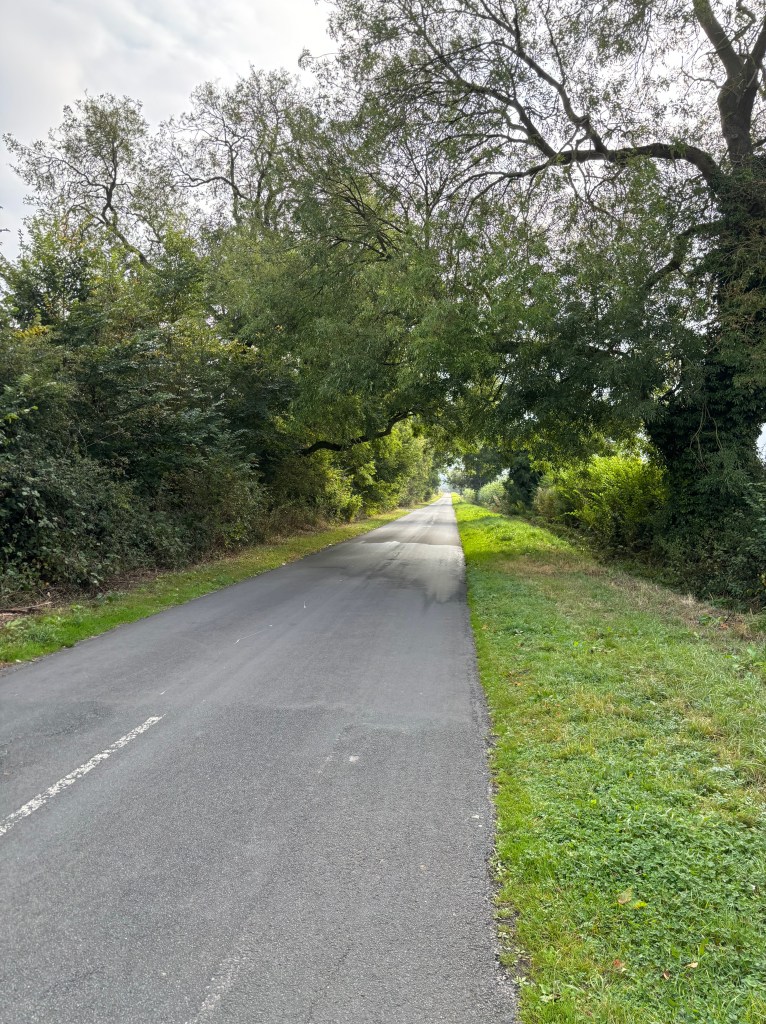
I needed to find a way that will help me keep riding these waves, as life is always going to throw waves at me, rather than fighting against them I need to start learning to ride them again. Life gets busy and we sometimes don’t notice that we are fighting against the tide, which is just exhausting and fruitless. Once we notice we are fighting, it is important to relax and ride the wave, accept what you cannot control, learn how to live with those certainties and make changes to what can control. It is simple but not always obvious. When I felt at my best I was regularly writing about my thoughts and taking exercise. When I go for walks 3-4 times a week (I struggle to run that much now, my knees just cannot cope) and write about life I know I feel more balanced, and maybe stop being as much of a knob as I know I can be. Here is a picture from my walk yesterday.

With that in mind I am going to make this more regular, I am also planning a podcast that will basically be the content of my blog in podcast form. I will let you know more about the podcast in due course.

If you are going through challenges no matter what they are, notice when you are stuck in your own personal drama triangle, relax, stop fighting what you cannot control and start taking control of what is in your power.

Speak soon and take care.

Happy Easter

Happy Easter, I hope everyone is having a restful weekend, even if it is just for some of it. So far I have a had a lovely weekend. Our weekend started on Thursday evening, myself and Lisa went to Hull City Hall to see Richard Herring’s Leicester Square Theatre Podcast on tour. He interviewed Bob Mortimer (yeah I know, absolutely fantastic) and Tommy Cannon. Bob was his usual hilarious self, sharing jokes from his joke book in the style of Peter Beardsley, telling stories about appearing on Who Wants to be a Millionaire and explaining the drawbacks of having electronic gates that rely on having an app. Absolutely sublime! Tommy was not as abstract as Bob, but fascinating and somewhat emotional all the same. He talked about how he met Bobby Ball and spent most of the hour regaling us with stories of his best friend and comedy other half. It was a wonderful evening.

On Friday we went out for breakfast at the pub where Jack works, the breakfast was reasonable and the company was exceptional. It is always a pleasure spending time with Jack and of course Lisa. For the rest of the day me and Lisa just slobbed out on the sofa watching Homicide New York on Netflix, and trying to remember what day of the week it was (Friday, Saturday or Sunday, it felt like a Sunday but then it could be Saturday as we were at work yesterday, then remembered it was Good Friday). At teatime we wrestled with 2 traditions, do we have fish and chips as it is Good Friday, or do we stick with our Friday after pay day Chinese Takeaway. We went with the Chinese takeaway. It was a no brainer really, the queues for the chippy are always mental on Good Friday and we just couldn’t face the stress of waiting ages in a queue, getting more and more stressed and hungry with other people experiencing the same negative emotional response. Lets be honest most of us get hangry waiting in line for fish and chips and I just didn’t need that amount of negativity in my life. We ordered our usual once a month takeaway from our usual Chinese Takeaway (Hing Wins on Springbank West). We get the same thing every time. We have prawn toast to share, Lisa has Chicken Satay and fried rice and I have Singapore Chow Mein. We like what we like, sometimes if I fancy a change I will have King Prawn Curry and fired rice. But this Good Friday I wasn’t feeling that adventurous. Poor Jack was at work, he is always at work when we have our pay day treat. I felt bad that he missed out, then my food arrived and I didn’t care anymore.

After our takeaway which was delicious as always (Lisa left some of hers for Jack to have when he got in, I didn’t leave any of mine, I love him, but not enough to share my noodles with him), we watched Barbie on Sky Movies. I enjoyed it, quite funny in parts, in some ways quite simplistic, but I did like the use of Brene Brown’s web of shame to describe the female experience, and the box of shame from a male perspective. Very thought provoking, the songs were fun and I had a couple of moments where I laughed out loud. If you have not seen it (I don’t imagine there are many that haven’t) then it is worth a look.

Saturday saw us going into town to see some live music in the shape of the Trinity festival ( an acoustic music festival in various pubs across the City centre). We wanted to see one particular act (Louie and Zac from The Froot). They played 2 sets in Humber Dock Bar. As usual they were fantastic.

Today and tomorrow are a chill out days. Lamb is in the oven, football on the telly and I am contemplating getting a beer out of the fridge.

Have a lovely Easter, be gentle to yourself and those around you, take the time you can to rest and recover.

Reflecting on working during the pandemic: Story 2; Clinical Team Leader, Public Health

What has been challenging for you, during the pandemic?

So, way back, when we first went into lockdown there was a little bit of friction within the team, as in team leaders and service managers with slightly different views as to how much  the staff should be working from home, and when they can work from home, accepting that we are a face to face service of school nurses, health visitors, etc. However, there were many things that could be done from home. We did resolve that quite quickly. But it was clear that there were very different views between us, and as time has gone on, what has become more apparent is that those views seem to be linked with how well those people work from home themselves, or how sociable they are. How much they need people around them day to day to do to do the job. So those that really miss it are the ones that are arguing for staff, to be back in the office, etc. As per the government directive, we stopped face to face visits for a few weeks. And that was really hard supporting that and the staff through that because it felt very wrong to them at that time. We didn’t have access to PPE, but staff were saying they would rather take the risk. We got us set up on Microsoft Teams and that’s what we used as an alternative  for putting eyes on people, but absolutely not  the same as face to face contact.

I’m a very tactile person. I know the staff that are comfortable with accepting the hug and I will readily give hugs. It’s It’s my default setting when, there’s nothing I can say, or do to change a situation immediately. Now that time has gone, I have found that harder and harder. And this last week has been particularly difficult. I think people are just reaching the limits of what they have endured through this. So for a lot of the staff, home working has been great. We’ve got staff, trying to work while home-schooling their children and we’re accommodating them. That balance of being at home and going out to work, and all that but trying to do a job alongside home-schooling your children, maintaining confidentiality, not letting your children hear what you’re talking about. As well as all of those pressures are really difficult. The same as the whole country. Some people’s partners have been furloughed. Some have lost their jobs.

That sense of powerlessness. I can’t make the situation better for them. And I fight every day with the fact that my default position is to try and be a fixer. And I think I’m guessing I think I’m getting better, but I certainly aren’t there yet. And there’ll be something going through my mind, like… “what about if you did that or what suggest this…” and I have to stop myself all the time.  I started saying “I’m an open book” to my team. I say to them if I appear to be stuttering and incoherent it’s either my menopausal brain or it’s because I’m trying to stop myself from saying something. Because I might be trying to fix, and I can’t fix and nor is it my right for me to fix. I think that was probably one of your sessions that really, really brought that to the front of my mind. I think that as a service, it has been particularly difficult a lot of staff have, really struggled and I have been trying to be there for them. I can’t change the workload and it is crazy. We are X number of hours down within the team, and we just have to just pick up that work and cover the work?

I don’t expect you to be able to do that as much as I want to. I care about my job, I care about the families, my work with the school nurses, I care about the people I’m working with. I try to create psychological safety within the team. I’m very self-critical and the rating myself but that’s me, and that’s my issue. When I make a mistake, I say to them none of us are perfect, we’re all fallible. And I want you to feel able to say to me, when you think something, either or when you know something’s gone wrong, when you’ve done something wrong, or when you think it might have and, and we’ll learn from it, and we’ll fix it. But we have, as in any team, there’s a range of staff, some who are real perfectionists. And, and I can see the conversation and it just feels so much harder having a team meeting, over Microsoft teams. Sometimes somebody says something, and I think, Oh, here we go, that there’s going to be there really defensive response coming soon, because of the perception of perfection, and there’s a perception of incompetence, and neither, are true, and whilst that, that’s obviously not an issue that is at all related to COVID, that is just something about team dynamics. It is just, it just feels so much more challenging to work with.

It, isn’t it and that just sounds exhausting being the compassionate leader in this environment.

I think that’s it. I’m very much a sponge, so I soak up the emotions of people around me, I can feel okay, inside. But if I’m working with a team that are really anxious about something, that is how I will end up and up feeling when actually I didn’t start out feeling worried about it. So, we could keep working through this, absorbing the feelings of the staff is exhausting. But I think that’s probably one reason why it’s becoming harder and harder for the staff is that every client, they go and visit, because they aren’t seeing many people. That’s what the health visitors are experiencing and offloading of all the feelings of either new mums or mums with toddlers. Yeah, and, and it is quite exhausting.

On a personal level, I’m a very solitary person, I’m very happy with my own company, working from home and has not been a problem at all. I haven’t struggle with lack of face-to-face contact or beyond that physical element that I mentioned earlier. And the way I looked at it is well, to get two hours more out of me, because I’m not spending that time travelling an hour to get to work and an hour to get home again. And I don’t have to do that. And that’s blissful. Because I don’t particularly like the travel time. I could never frame it in a way as well. I can plan my day, or I can wind down from that day. I was thinking, oh, gosh, I got to get home and start cooking the tea. You know?

I’m missing my daughter like crazy because she lives elsewhere. She’s just married. She’s doing okay, but I miss her.

I think another thing that was challenging for me quite early on was I felt a lot of guilt. We were asked to volunteer for the nightingale hospital at Harrogate. And, and I just didn’t want to. It had been 12 years since I was on a Ward and more much longer than that, since I was anywhere near a ventilator, didn’t want to leave what bit of my family I could have contact with at the time. Although I am an extremely stubborn person internally, I can very easily be guilt tripped. And, and I very much saw my responsibility as being there for the team. But I don’t know whether that was an excuse or not. I just didn’t want to go, and I can’t dress it up any other way. That did come with some level of guilt. So, when I could be involved more recently in our vaccine centre, then that felt like something more useful. I suppose I was looking at it in a practical sense. But people say, oh, gosh, this is making history. And I don’t know why, but I didn’t quite look at it like that. But I can see what see what they mean.

You know, in lots and lots of the properties that we visit, there’s no two-metre social distance, and people don’t have that sort of luxury of space. People are not always honest with you when you ask if anybody has got any symptoms? Then the Health Visitor arrives to do a visit to be told that somebody had gone for a swab. So, they hadn’t answered the questions, honestly, because obviously, somebody did have symptoms.

In the early weeks when the government said no, no face-to-face community visits.  That was when the staff were fearful as they were unable to see their patients face to face. So, they understandably view themselves as responsible, and they can’t, they can’t go in and see them and assess in in the way that they would normally.  They felt a huge sense of responsibility. GPs weren’t seeing anyone face to face, the situation with midwifery services was slightly different. So then the staff were getting requests for midwifery services to go and do more and more visits. And so it almost felt like it probably wasn’t because it’s very often just how things get communicated or twisted, as that comes down the communication path is it felt like midwives not doing one thing became another surfaces responsibility in a completely different trust. And then GPs when seeing patients face to face there weren’t doing six week checks on babies. And so that felt like it became the health visitors responsibility. I don’t really think that that affected me significantly. So I was trying to support them just trying to think back how I would be doing it and and I think it would be acknowledging that their concerns that they felt responsible, but that it was either a national decision to do things that way and and an organisational decision so therefore, they they couldn’t be held responsible but it’s still that responsibility.

What could you possibly see as being helpful?

I guess, the way the organisation moved forward with technology, I think it’s given those more options as a service moving forward. And I think, there’s no sense of rushing, or pulling people back into bases and offices. So I would, I guess, my concern there, I’m gonna go off at a tangent, sorry, my concern that is, is for those staff that do need that. That time in the office to run things past a colleague, all of which is achievable. Everybody has mobile phones. Everybody has a laptop can all call somebody or they have a whatsapp group for checking in and checking out because of learn working. And I think it’s probably been good to demonstrate that for some people who are homeworking can work. And so for me, that hasn’t had a problem with that. I will, I would say that as long as I meet the needs of the service and the staff, so anybody moving forward that wants to see me face to face. I accommodate that, I think, I think the challenges have led to us being more innovative, which is probably been a good a good thing with hindsight.

Working from home has been very helpful for the reasons that I described before. For me, I still feel it’s given me a better work life balance. But I don’t I don’t see that for the staff. Because what I see for them is that actually, rather than in the travel in time, the logging on earlier I was talking about at a team meeting the other day, and I said, I’ve been trying to work out for months why communicating on zoom or teams is so exhausting. And I said, I don’t know whether it’s right or wrong. But I’ve come to realise that unless it’s a meeting I’m leading on, I’m probably very often not always present completely in that meeting, and probably trying to do something else at the same time. So if I was at a meeting in work face to face, I wouldn’t have my laptop out working, because I would think I was being rude. But actually, that’s very often what I’m what I’m doing now. And that is probably what a lot of staff are doing as well, when you look at where their eyes are. And you know, I don’t either. I’ve found that difficult. I’m not sure what else to find helpful.

 I’m meeting my own needs and I hope the nurses as well. But you know, I’ve worked with the same team for three years now. That’s not to say always get everything right, because I don’t. But you just learn to read people and know when something’s right.

Reflecting on working during the pandemic: Story 1, Clinical Nurse Specialist

In March 2021 I started interview people that had worked through the pandemic. I wanted to interview a variety of people from a variety of backgrounds. I wanted to talk to people that where not being focused on by the media. I invited people that worked in the NHS as Nurses, Allied Health Professionals, Senior Managers, and people who did not work in the NHS, including a Funeral Director, CEO of a Charity, a Managers from commercial companies and managers from Government organisations.

In the end I interviewed 25 people via zoom. Each interview lasted about an hour and focussed on 4 questions:

  • What has been challenging during the pandemic?
  • What could be possibly be seen as helpful?
  • What would you ask of others to support you in the coming months?
  • What would you offer to others to support them in the coming months?

Initially I was considering writing the interviews up as a research paper, to be honest I attempted a thematic review of all the transcripts, but I found it far too challenging and time consuming. I sat on the data for a few months playing about with different ideas. Then I decided to use the interviews as a basis of a novel. I started this late in 2021. By Spring 2022 I had got the arc of a story and the first Chapter was coming together very nicely. Then my Mum got very ill and died in the August, and since then I have really struggled to get any momentum with it. Yesterday I decided to revisit all of the stories and decided to share some of them with you via this blog. I am hoping that it will re-spark some inspiration in my to start writing the novel again. I have anonymised the stories including removing where they work, this was part of our agreement when I started this project to allow them to be as candid as possible. Reading some of the transcripts and listening to the recordings has reminded me how extraordinary these people are and how incredibly surreal that whole time was. So here is the first story of a remarkable Clinical Nurse Specialist, she was the first person I interviewed and she blew me away.

Interview 001

What has been challenging during the pandemic?

 It all started on a Monday in March 2020 for us. I was told on the Friday before that we could no longer run the service in the Hospital we were currently doing it in, as we could not adequately socially distance. We had been given space in a clinic in a town just outside the city we worked in, in a community hospital, away from medical cover in a completely new environment.

So on the Monday morning, myself and my colleague packed our cars with as much equipment as we could and transported it to our new facility. The rest of the bigger equipment was brought in a removal van later that day. When we arrived we had the hospital to ourselves more or less, we had a completely empty hospital. It was bizarre, a completely surreal situation. We then set about contacting 300 patients to tell them their treatment centre had moved, and they would have to travel to a different town (only 10 miles away). This for people who are used to going to the same place, and are anxious about their condition and now on top of that are worried about catching COVID was difficult to take in. So we spent quite a bit of time reassuring patients.

We all just pulled together and got on with it, it was completely surreal.

We had minimal staff to help, we were all by ourselves, giving potentially dangerous treatments with limited medical back up. But we just got on and did what we needed to do.

The surroundings were beautiful, it was like a scene from the Teletubbies, with grassy hills, flowers and rabbits. It was so calming being away from the hustle and bustle of the inner city hospital. We were seeing 20 patients a day, none of them tested, we just cracked on and did it.

We were there from March to June and then as activity started to get back to normal the community hospital wanted their space back. The only problem was we could not go back to our original space as it was not suitable for patient safety (we could not socially distance).

So our Matron had found us a space at another hospital in the trust. This was a large room in the old administration block that had been used for storage for quite some time.

When we went to look it was floor to ceiling with chairs and furniture, there was mouse droppings on the floor, it was no way fit for purpose.

Within 3 weeks however it was emptied of rubbish, cleaned and decorated it now looked like a clinical space. So we let the 300 patients know that we had moved again, which you can imagine was another challenge. This was a really testing time, it was completely surreal but we created a fantastic space. We saw the challenge, saw beyond the muck and grime, saw what was needed and cracked on and did it. How did I do it? I just saw what it could be and set about sorting it. When I think about what I did to set up a stand-alone unit, a completely different unit to what we had, I giggle to myself. I felt excitement, adrenaline, fear, but I also felt pride. I was proud of what I had done. I was proud that we had managed to keep our patients and colleagues safe.

Me: Why do you do your job?

I love it, I do it for the patients, I want recognition for my patients, I did not want them forgotten. I wanted to put the patients first not the circumstances.

I believed I could do it.

At one point I worried that I might die from COVID, being a smoker, then I pulled myself together, and got myself out of that mindset.

Christmas was horrible, it was lonely, followed by January that was a real lull, it was so mundane with no mixing.

We are due to get a new purpose built unit and I am involved again and that makes me feel better. We can make things 150% better.

I always need a challenge.

When I think back to March and then June last year, I had nothing, I had to get everything. I had to find out everything there was nobody else.

What could be possibly be seen as helpful?

(Her answer to this was not exactly what I expected it turned into more of an extension to the first question, however we did resolve that a lot of what she relayed to me in the first part of the interview as helpful)

The 2nd wave was surreal, it seemed to hit harder. None of my patients are swabbed, and they are high risk patients. I think we are one of 2 departments that don’t swab.

Me: why is this?

It is just not viable they would need to have PCR tests so frequently that they would spend too much time in the hospital. So we screen them very carefully. To my knowledge only one of our patients has become seriously ill, and considering they are all immuno-suppressed that is quite remarkable. We have had no outbreaks amongst staff either.

Me: I wonder if this might have something to do with your mindset as you know none of your patients have been tested.

Maybe.

We have been the only service that has kept going, this is despite having 2.8 nurses to 5000 patients. Quite remarkable. We just crack on and do it.

What would you ask of others to support you in the coming months?

Understanding of how our department works.

Do not make decisions on my behalf.

Believe me when I say we need more staff, and it is not about COVID. We need more staff our patient group don’t get better; it just gets added to.

Trust me I know what I am doing.

I want to expand my service, there is no cure to the condition we treat therefore expansion is necessary, the more we improve outcomes the more patients we get.

This is what I want, this is what I need!

What would you offer to others to support them in the coming months?

Honesty

I will be clear, and open.

There is no right or wrong

I will listen.

Do you still strive for the Insta family lifestyle?

We all know it is unrealistic to expect our family life to be perfect, but we cannot help but compare our lives with our perception of the lives of those around us. Whether that is on social media, or just watching those glamorous parents and school drop off and pick up.

It always seems that everyone else has go their shit together other than you. In reality we know they don’t but we just cannot help ourselves and start competing with those around us, even if they don’t realise they are in competition with you.

The thing is we all do it, we are all in competition with each other. We all know it is fruitless and just makes us miserable. We have all read those self-help books that tell us to stop comparing ourselves with others and compare our present performance (as a parent, sibling, child, or friend) with our performance in the past. In fact I have written blogs about it. It doesn’t help, we still feel inadequate, then feel more inadequate because we are flawed and cannot take control of our lives.

Here is a simple approach that will help you manage your response to this and give you the ability to make decisions that are best for you and your family and not worry about how it appears to those around you. This approach will help you feel comfortable not always have to create those insta moments. Not to say capturing those fabulous insta moments is wrong, and should be avoided, but it is ok for them to be the moment you want to capture as a family to remind you of that wonderful experience you had as a family. And also accept that you will have moments that you would rather forget. Although to be honest I have pictures of my boys that were taken well they were behaving like little shits, that with the passing of time I treasure more than those picture perfect moments.

  • Accept that your life is not perfect (I know you already do, but stick with me). You are going to compare yourself with others, and there is very little you can do about it. You can however understand why you are doing it. Be curious and seek to understand why you are thinking what you are thinking and feeling what you are feeling without judgement, but with kindness and curiosity. You think and feel what you feel for a reason. You thoughts and feelings do not define you however they are just thoughts and feelings.
  • Once you recognise and understand your thoughts on feelings it is important not to allow them to dictate what happens next. It is very easy to become fixed on these thoughts and feelings. It is very easy to see a picture story on instagram posted by a friend during their day out at the beach, where the kids are playing perfectly, mum and dad look gorgeous and blissfully in love, and feel that you need to recreate that yourselves, but your kids keep arguing, your husband is always on his phone answering work emails and you feel fat and ugly in you new swimming costume. You feel like a complete failure and resentful of the life your friend has. None of this is real, it is all driven by thoughts and emotions that tell you how your day out should be. It is important to be able to recognise when you are about to be hooked by a thought or emotion that can be unhelpful. You can do this with practice, by practicing mindful exercises of being in the moment, and noticing when you mind wanders, once you start to think about something other than what is happening in the moment, stop thinking and start to concentrate on the moment. Do this for 5 minutes everyday, and you will soon be able to use this technique when you are being consumed by an unhelpful thought. You will then be able to recognise that you are getting hooked on the thought of being inadequate and not having the experience you hoped for. You can then let that thought go and be in the moment, recognising what is really happening in the moment. You now in a better place to take control.
  • Be very clear what you value, and what is truly important for you and your family. Take some time to think about what your current core values are, talk as a family about what you value as a family. There are loads of values exercises you can do, in fact I have quite a few blogs on them. Most importantly though is to talk about what you value on a regular basis so you are clear what is important to you. Now lets go back to that less than ideal day out. Instead of getting hooked on the unhelpful thoughts and just becoming resentful and angry, you are able to see what is exactly happening and appraise this against what you value. If what is really happening (your kinds bickering and your husband answering emails) is in line with what you value, then no action needs to be taken. If not then what would meet you values and what action can you take that is in line with those values.
  • The last step is to take action that is inline with what you value and gets the results that meet your values. You are then able to remind your family that what is currently happening is not creating the best day out, and you can do something that everyone wants to do, that meets your family values. These actions and outcomes might not always be perfect but they are in response to what is really happening not just in response to your thoughts and emotions.

If you want to know more about this approach or discuss how I can support you to create a work/life balance to meets you and your family’s needs then please message me.