12/07/2020 A week off and a visit to see my Mum

I have had annual leave this week. Annual leave when you work from home is quite surreal. Monday and Tuesday we stayed at home, which when home is your work place is very strange. I did however manage to avoid logging on to my work computer and going and I muted the work WhatsApp group. Normally when I have been on holiday I would not normally go that far, but when the lines between work and home are less defined, it is really important I think to impose distinct barriers between the two.

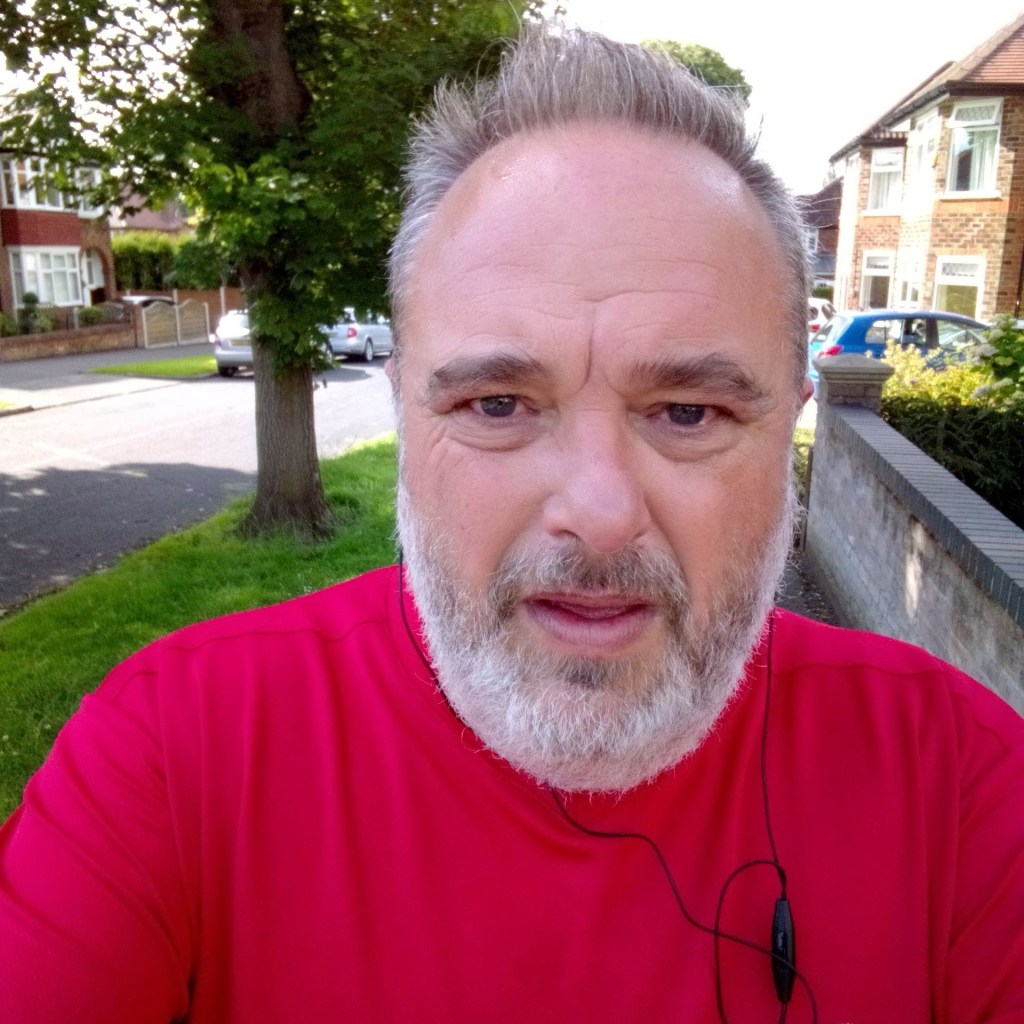
On Monday went out for a run for the first time since the end of February. It was really more a run/walk, to get me back into the swing of things and not put myself off on my first outing. I used a route I know that is a mile long. Before the lock down this had become my regular almost daily route, so it felt good to be out on familiar ground. It hurt, but not as much as thought it might. It was the feeling afterwards that I realised I had missed the most. As we come down from exercise we get a rush of endorphins, which is just the best feeling. If you do exercise you will know what I mean, if you have not done any exercise for a while (like me), I would strongly recommend you get out there and do something that gets your heart rate up. It has certainly improved my mental health this week. The 2 runs I have done this week have been added to my daily hours of happiness.
Wednesday was an emotional day. We went to Chester to visit my Mum. I have not seen my Mum since December. My irrational self had worried this day would never come. I know we are supposed to keep 1 to 2 metres distance but when I saw her I couldn’t help it. I gave her the biggest hug, and we held on to each other and sobbed. After half a year of being apart and with the prospect of never seeing each other again, that was the most heartfelt hug I had ever had. The days preceding our visit I had been impossible to live with (sorry Lisa). Ben had come with us for the day to visit his Gran it was lovely to see him with her. He didn’t stay as he needed to get back for work. Wednesday was a precious day as was Thursday. We spent the morning talking, crying and laughing just me and her, and then before we left my niece came with her daughter Ava (welcome to the family Ava). Those are 2 days that will live long in the memory.

As you will remember from my previous blogs that I am putting together a series of webinars about personal leadership and resilience (similar to what I write about in my blogs) based on a book I have been writing for he past 2 years. Well since Thursday I have been reworking what I have written so far to put into a companion guide to go with the webinars. I can then use that guide as the overview for the book. Preparing these webinars has given the book a new lease of life. Writing the webinar has refocused my goal, and I can now see my compelling vision much more clearly. If you are interested in checking out the webinars the link below will take you to he eventbrite page for the first webinar on the 25th July. If you want to sign up for all three and receive a copy of the guide contact me via my contacts page.

https://www.eventbrite.co.uk/e/connected-living-webinar-1-connected-self-tickets-113189934140

I am going to spend the rest of this morning writing and looking out over my garden on this lovely sunny Sunday. Stay safe everyone
04/07/2020 The day the pubs opened

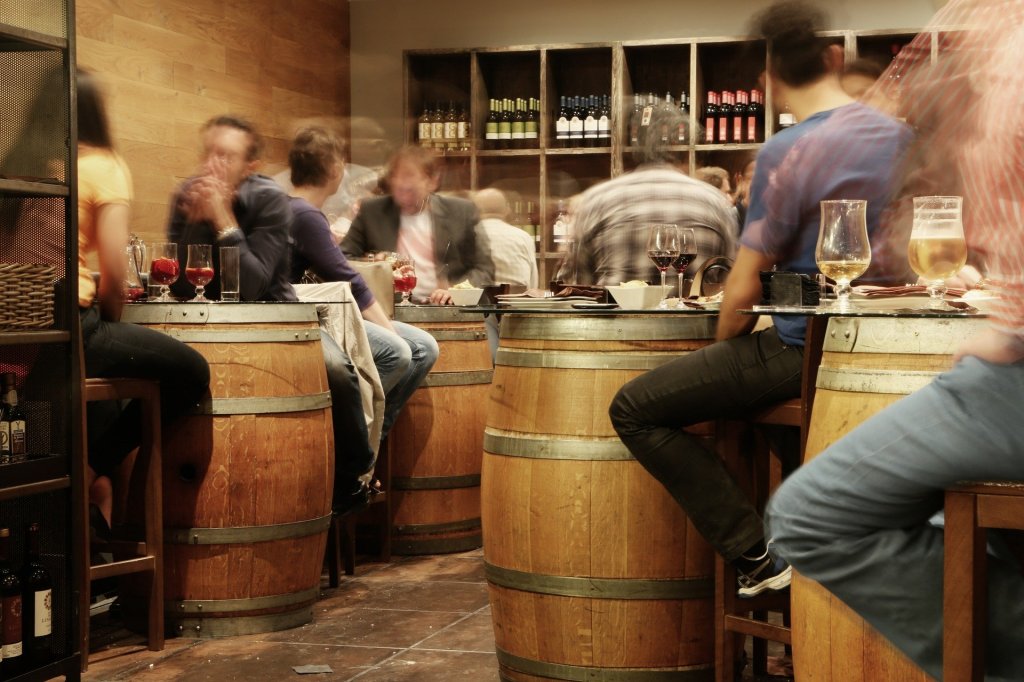
On the 21st March I a blog titled “The Day The Pubs Shut”. 3 and a half months later they are reopening, albeit with restrictions. To be honest I have mixed feelings about it. On the one hand both my sons work in pubs, so they are able to return to work for the summer. This has meant that Ben has returned to Manchester and regained his independence. On the other hand I am concerned that opening places that sell a drug that has a track record of causing anti-social behaviour and a reduction of inhibitions on a Saturday has more to do with making money than the welfare of the public. If the government truly put people above personal gain, then efforts would have been put into safely opening gyms, swimming pools and arts venues, alongside hairdressers not pubs.

As I say I have mixed feelings, I am pleased than Ben and Jack are able to go back to work. I just worry that the government and many people are not putting people first. Money should just be a tool to support people, people should not be a tool to generate money. Successful profitable businesses are crucial for the welfare of our country, but lets not forget these profitable businesses should be there to provide a service for people, if those people are sacrificed then those profitable businesses will not survive long. Now is a time for the few to make sacrifices for the good of us all (and many good successful companies are).

When the pubs do open and I suspect a few are already open (I am writing this at 8 am), they will be very different from what they were back in March. You cannot stand up, you cannot go to the bar, if you are inside the time you spend in the pub is restricted, you have to give your details on entry. Like many aspects of our life outside of our home we are confronted with new rules to keep us safe. They are however very different from what we are used to, therefore we have to think about what we do, when normally we would just do it. Going to the shops, the pub and getting a haircut, were once routine events that we had done repeatedly, we had built up a muscle memory of what we do in those places. Now we are having to build up new muscle memories. Now we are going to feel uncertain, and awkward about stuff we use to do all the time. This takes it’s toll physically and emotionally on us. Then we have to manage the uncertainty of what comes next with talk of second waves and new potential pandemics. If we are not careful and take care of ourselves, coming out of the lock-down could be worse than the lock-down itself. In response to this I have put together a series of interactive webinars starting later this month, contact me via my contacts page if you want to know more.

So when you are out and about shopping, going to the pub, having a haircut and hopefully soon going to gyms, music venues and theatres, be kind to yourself and those around you. Remember everyone is new at this, we are all going to go the wrong way, we are all going to forget what we are doing.

Have a lovely weekend and stay safe.

Connected Living Webinar

I will be holding a series of 3 short webinars entitled Connected Living.

The webinars are in response to us coming out of the first wave of this pandemic, and how we adjust to a different world. Many of us will have very different lives for a multitude of reasons. For that reason it is really important that we are equipped to roll with the punches and emerge in our new world, battle scarred but all the stronger for the experience.

The three webinars are:

Connected self

We will explore how we manage our well-being, the importance of accepting and appreciating all aspects of our lives, and having a clear purpose that is aligned to our values and is reflected in our goals.

Connecting with others

We will explore how to build trust with ourselves and others, how our preferences effect how we communicate, the importance of feedback, and our need to be part of a community. We will also discuss the impact of our perception of the world on our relationships and how that can have an effect on how we connect with different groups.

Loss and the transition to a new beginning

This webinar builds on the work of William Bridges and explores now with our new understanding of ourselves and others how we can move from our old lives to our new reality.

The webinars will be run over consecutive weeks during the evening (BST) or at weekends.

Dates.

Connected Self: Saturday 25th July 2020 11 am to 12:30 pm (BST)

Connecting with Others: Saturday 8th August 2020, 11 am to 12:30 pm (BST)

Loss and Transition to New Beginnings: Saturday 15th August 2020 11 am to 12:30 pm (BST)

The cost of the three webinar series will be £45 per person payable in advance.

If you are interested email me and I will send you payment and joining details.

matt@mattycoach71.com

Hurry as places will be limited

30/06/2020 100 Days

Back on the 20th March I started writing a regular diary of my experiences during the pandemic. Little did I know that just 5 days later I would start with symptoms that would stay with me 11 weeks. I am fully recovered now, apart from being very unfit.

Little did I realise the tragedy that would unfold around the world with up to know an estimated (under estimated) half a million people have lost their lives to this terrible virus. After 100 days we have lost 60,000 + people as a result of COVID-19 in the UK. What is even worse is that it hasn’t finished with us yet.

Millions of people are unemployed as a result of the economic crisis it has caused, and we are yet to feel the full effects of this crisis.

A microscopic virus has changed the world for ever. That is quite hard to comprehend, that something so small can have such a devastating effect.

Since March many of us have learned how to use zoom and other video conferencing software. I am learning how to teach people remotely using video conferencing. I spend my days working from a desk in a bedroom with my laptop resting on a box to bring it up to my eye level.

Since March people wear masks on buses and in hospitals (not just clinical staff anymore). Everyone you meet has an opinion on PPE and know what it stands for (when I say everyone you meet, I mean everyone in your household, or bubble).

Since March all pubs, clubs, music venues, most shops, swimming pools, gyms, hotels and many other places have been closed.

In March the schools and universities closed and exams were cancelled. Millions of children and young people were robbed of their last days of education. Millions of children have been deprived of playing with their friends.

Millions of couples including my niece have had their weddings cancelled.

Thousands of people have died without a loved one there to hold them.

Millions of parents and grandparents have not been able to hug their children and grandchildren. Including me, I have not seen my mum since December and I so desperately want to give her a hug.

So far we have survived. We are more resilient than we thought. If you had read this account a year ago, you would firstly think it was far fetched, then you would wonder how anyone could get through it. So far we have, and as a society and as a human race we will see the back of this pandemic.

So lets hang in there, it is not going to be easy but we will get through it.

27/06/2020 My thoughts on working from home that turned into thoughts on leadership

I have been working from home now for about 6 weeks I think (all these weeks seem to be merging into one). I did not like it at first, I felt disconnected from everything, I felt I had to be attached to my computer, just in case someone tried to contact me, and I felt guilty for not being at my workplace. The feeling of guilt was the most profound, even though I was working just as hard if not harder, working from home. The perception of working from home in our organisation is still problematic, with this underlying and often unspoken issue of trust. Many managers are struggling to trust that staff are being as productive as they could be when working from home.

Now I am not criticising managers for these assumptions, for many managers this is something they have learned. Not from formal leadership courses, or from professional training, but from their predecessors, peers, and from their environment. It is part of the workplace paradigm. This paradigm is slowly diminishing, but it has be so widespread and pervasive for so long that it is going to take some time and a lot of to shift all of our paradigms.

The leader/follower paradigm in my words

When I was writing the sentence…Many managers are struggling to trust that staff are being as productive…. I started writing…. are struggling to trust their staff… Then I realised I had fallen in to the leader/follower paradigm trap, it is after all so pervasive. Leadership in our culture and in many (but not all) is linked with the cult of personality. We hold up the charismatic leader as the ideal. Leadership requires strength, knowledge and decisiveness, do you agree? Are there types of people that make better leaders? Are these people somehow better than the rest of us? Are they more powerful? Are they more trustworthy? You are probably saying no. How many times then do you hear managers say their staff, when talking about the workforce in their team? How many times have you gone along with that?

In many workplaces there is parent/child (leader/follower) relationship with managers and staff. Which when it is a nurturing relationship can be quite pleasant, and staff feel loved and cared for. When I was a ward manager every Christmas I would buy the ward special Christmas food to go in the staff room. When staff were having problems they would come to me, and would put my arm around them and try to solve it for them. When things were going well it was a lovely comfortable place to work. When it was not going well things could go unresolved, until I would get annoyed then the relationship would turn from nurturing to chastising. Neither relationships promote productivity, innovation, and self efficacy. I loved my staff but I did not completely trust them to do the right thing. Much like my relationship with my children when they were younger, I loved them but I could not always trust them to play nice when I was not looking. The staff in teams though are not toddlers. Teams are mostly populated by motivated, responsible, skilled adults. If they are not, then I suggest you have a look at your recruitment processes. If they are responsible adults and therefore equal ( not in pay, but certainly in status as a Human Being), then should we not treat them like adults and trust and encourage them to make informed decisions.

The leader/leader approach

I have mentioned David Marquet before and his book Turn The Ship Around (I highly recommend it). David Marquet is a retired US Navy Submarine Captain. The book describes how he shifted his leadership style from a leader/follower approach to a leader/leader approach, and took his submarine crew from the worst rated crew in the navy to the top rated crew in the navy. In the book he describes the difficulties he encountered trying to achieve this. He experienced opposition and resistance from all angles and even struggled with his own instincts. What it shows is that if you work form the premise that the team members are capable to make decisions in their sphere of knowledge and experience, and that team members when they believe and understand the purpose of the team and buy in to that will work really hard to live up to that and achieve the goals of the team. What I find helps is seeing everybody in the team as equal members, every team member has their sphere of influence and expertise which fit together to produce the body of work for the team. The leader is there to serve the team to enable them to produce the best outcomes they can. The team are not there to serve the leader. The leader does not have ownership or patronage over the team.

The concept of the leader/leader approach is to assume that all team members have a leadership role and for the benefit of the team must be encouraged and allowed to exercise that leadership. The role of the overall leader is to keep the team on track to achieving their goals and holding the individual leaders to account for the role they play in that.

To have teams that can work effectively remotely there has to be high levels of trust through out the team. The manager must trust that team members are working hard towards achieving their goal. Team members must trust each other to show leadership in their areas of expertise and trust their managers will support them to achieve their goals.

The first step towards a leader/leader model is to shift our paradigm of leadership as a charismatic powerful individual. Leadership is a team approach.

If you want to know more about this model, Turn the Ship Around, by L.David Marquet is a great place to start.

Stay safe.

Emerging from the first wave

Whatever we have experienced in the past 3 months, I doubt many of us have experienced anything like that. As we begin to emerge or prepare to emerge from what could be the first of the pandemic, many of us are nervous and cautious about our new futures. There are a lot of questions that are unanswered and may well remain so. Many of us will be suffering from the effects of this pandemic both physically and psychologically. Living and thriving through this world of uncertainty and upheaval seems like a daunting prospect. As we any big issue seeing it in its entirety can make the idea of tackling it impossible. We have got this though, but first we have to remember, this is a game we don’t have to win, all we have to do is stay in the game.

Pay attention to what you can control

We all know it, but in times like these we can easily get caught up in stuff that we have no control over. So we have to consciously make an effort to examine what is going on in our world and sort them into three categories:

  1. What is out of our control
  2. What is within our control
  3. What is not important

Write down what is affecting you or is going on in your life on post-it notes. Write as many things down as you can. Have a rant, get it all off your chest and put them down on those notes of paper. When you have run out of things to write down, ask yourself is there something else that is hindering me at the moment? Make sure you have some spare post-it notes, as some other issues may well come up as you are sorting through all of your hindrance’s.

Now find yourself a space either on a wall, or table, even a big piece of wall paper. Divide this space into 3 sections using the titles above. Start sorting through your post-its. Initially just using 2 categories, what you can control and what you cannot.

Once you have done that concentrate on the out of your control category and take out any of them that are not important. If you are having trouble removing any, ask yourself these questions:

  • In 6 months will this still be an important issue? 
  • Does it affect me directly?

Once you have whittled down your out of control section, you can concentrate on what is yours to control. First put them in order of priority. Which of these needs to be tackled first? Then what next, what next and so on until the list is prioritised.

Now look at the bottom of the list and decide if it is important enough to spend time and energy on . Keep repeating with each one until you get to an issue that does require your attention. It is then time to start planning what you are going to do to address those issues.

Control is now beginning to shift back to you, even though there are still issues that are out of your control, you are now exercising choice, by choosing to not spend time and energy on them.

Live in the present

As the famous explorer Miles Hilton-Barber said  (and I paraphrase) we walk through life with enemies stood either side of us, our regrets of the past, and our fears for the future. If we spend too much time listening to either or both, we fail to notice and act on what is happening right now.

At the moment I find myself remembering the past, sometimes wishing I could have those times again, and sometimes wishing I had acted differently. Other times I find myself trying to make sense of a future where everything will be different. Both destinations are not terribly helpful if I spend too long in either. They can end up distorting my view of the here and now.

The only place worth being resident in is the present. The past and the future are useful as reference points to help you plan, to solve the issues you have control of in the here and now. Spending too long in those two destinations just encourages you to concentrate on issues out of your control.

The only place that actually exists is the present. The past and the future are a series of chemical reactions and electrical impulses in your brain.

Summary

Manage your personal emergence from the first wave by practicing to control only the issues that are in your power to control Accept and appreciate your past, even use it as a point of reference, to help you make plans in the here and now that may serve you well in the future. Don’t spend too long imagining your future, the only way to make the future is to act in the here and now.

20/06/2020 Antacids, antihistamines and vitamin D

Before I start my blog. Its the 20th June!! We are half way through the year!! How did that happen? I suppose it has been a hateful year and we will all be glad to see the back of it.

Anyway I have been feeling a lot better this week. Now I am not sure if it is the antihistamines and vitamin D that are working, or that I was just going to start feeling better anyway. But I am feeling better so I will take that. Also I am not sure if this need to take antacids (just Rennie) is a sign of my age or the after effects of COVID-19. Now I can work on my fitness again and start building up my daily activity.

I have noticed this week that I have had to pay attention to my emotions. I had my first moment on Monday when I received an email from the Great Manchester Run. In May I was supposed to take part in the GMR raising money for Cancer Research. Well it was initially postponed until September. That brings me back to the email, which was to inform all of us that they had decided to cancel this years event. It wasn’t a surprise, I wasn’t shocked by it. As I read the email though I had an overwhelming feeling of sadness. I was running this race to raise money for Cancer Research, is which is very close to my heart. My mum is having treatment for cancer and this was my way of doing something to help her and everyone else undergoing treatment. A cancer diagnosis makes you feel so helpless, and this was my way of having some control. For a moment this was taken from me, and I felt incredibly sad. I say for a moment because I am still going to run 10km in September, only it will just be me running around Kirk Ella, Anlaby and Willerby. I am still going to raise money and do my bit. It will not be the same, but it will be emotional all the same. I will share my giving page soon, so please feel free to sponsor me if you can.

Mum was getting some results this week (they were ok) and results weeks always heighten my anxiety, even more so now we are in lock down. Now I live in Hull and Mum lives in Chester so I never saw her frequently, but somehow having the isolation rules seem to make it much worse. I speak to her everyday and that conversation with her is the most important thing I do. It keeps me sane, it makes me feel content. We both agree it is not the same as a hug but it is the next best thing.

I am enjoying working from home, not having to commute is great. I get up have my breakfast, take the dog for a walk then start work. When I have finished I go upstairs and get changed, then that is it my day is over. I am still managing to do all that I did previously just in a different way. I am managing to coach more people as we do not have to find rooms and travel between sites. I am getting more writing done than I would normally. What I am noticing is that the incidental contact is less and the casual conversations with a wider group is not happening. This has given me a feeling of missing out this week. Then I still manage to communicate both socially and work related with my colleagues every day, especially now we are using the instant message and phone service (Cisco Jabber) meaning that I am fully connected with everyone.

I have noticed that I have been grumpy and feeling sorry for myself this week. To be honest I am willing to accept feeling a bit pants this week. Even though I have felt down in the dumps, I have managed to articulate what I was feeling. I was feeling sad and isolated from my mum, and that is a perfectly good reason to feel sorry for myself. I have also recognised that I have a conversation with her everyday and have done for over a year, so I speak to her more now than I have done since I left home 30 years ago. So I feel sad, but I have so much to be grateful for. I have also managed to take control and make a plan for completing the GMR sans Manchester. I promise I will share my giving page. In fact here is the link if you want to donate. https://fundraise.cancerresearchuk.org/page/matthews-giving-page-602

It has been an emotionally challenging week, but on reflection is full of positives.

Stay safe

How do we maintain trust in socially distanced uncertain world?

Photo by fauxels on Pexels.com

We have been living with COVID-19 and it;s restrictions now for 3 months, and I don’t know about you but it is starting to take its toll. This is very much in evidence with teams and social networks that for 3 months now (and is a few cases longer) have been operating remotely. The strain on remote teams and networks if not addressed will cause many to break.

Most commentators and researchers on teams and leadership (Lencioni, Brown, and Sinek to name but a few) point to trust being the cornerstone to the success of any team whether they work, recreational or social teams. So how do we maintain and develop trust in our teams that are often remote from each other, and are facing challenges they have never faced before?

Now teams learn to trust each other through regular communication and social interaction. We trust each other, because we know each other, we have an understanding of other. This is developed through incidental social moments that we have throughout the day, and then having social events outside of work. Those small things that develop within the culture of a team. 

All of these small things are second nature, we rarely think about or talk about them, they are the fabric of the team, and as new people join the team they adopt and add to the culture of the team. These incidental moments are what are present in functioning teams and are often absent or dysfunctional in failing teams. 

Many teams over recent months have become remote teams, with some members working from home. Even teams that still work together, now work together in very different ways, break times that use to form the bedrock of those social interactions, are much reduced with only a small number of people allowed in break rooms. Not only is there less opportunity for individuals to interact and build trust, the opportunity for leaders to interact is drastically reduced. As good leaders set the tone for a team it is vital that leaders find the opportunity to build trust with and within their teams. 

Building this trust requires intentionality and leaders to consciously pay attention to what creates trust in teams and apply that to their circumstances. Zenger and Folkman (2019) wrote last year in The Harvard Business Review that their research showed that there were 3 elements to trust in leaders:

  • Positive relationships
  • Good judgement/expertise
  • Consistency

Their research suggested that teams trusted their leaders if all these elements were present. The research also suggested that trust could still be present with varying combinations of these elements. What was surprising though was that the most important element to create trust was positive relationships and the least impactful was consistency. 

This highlights the need for leaders to intentionally seek out social interaction with their teams to foster those positive relationships. This means scheduling regular meetings and 1 to 1s with staff but not just to talk about business but to pay attention to the lives of teams members and share experiences. This means allowing time in virtual meetings for social interactions instead of ending the meeting when all agenda items have been exhausted. It is important to create an environment that suites the team and suites the new circumstances of the team. 

It is also worth considering Brene Brown’s checklist of trust. This acronym can be used as a checklist for teams and individuals alike to establish if you are creating an environment where trust can be fostered.

  • Boundaries: Are the boundaries of acceptable conduct and behaviours, declared and understood by all? Everyone must participate in and agree with the parameters of team conduct
  • Reliability: Everyone does what they say they will do. There is a consistency in response and behaviour.
  • Accountability: When the team or members of the team exceed boundaries, behaviours fall below the acceptable standards, or a mistake is made, these shortcomings are acknowledged, the team or individual apologises and makes amends.
  • Vault: No one in the team shares what is not theirs to share. Therefore gossiping is not accepted by the team.
  • Integrity: The team and its members will do what is right, rather than what is convenient.
  • Non-Judgement: The team and its members will support and help without judgement, and will ask for help and support without judging themselves
  • Generosity: The team and its members will always take the most generous interpretation of the situation, assuming that everyone is trying their best, but sometimes people need help to improve. 

Using these checklists in an intentional way will help teams maintain and improve trust in these difficult times. We all have to establish new patterns of working. At the heart of these new patterns is people, and is vital to the success of organisations and businesses that leaders pay special attention to the people in those teams to foster trust.

13/06/2020 Eleven Weeks!!

Well it has been 11 weeks since my symptoms started!

When I wrote my blog last weekend I was hopeful that I had seen the back of the after effects of the virus. It had been over a week without symptoms. By Sunday afternoon my optimism was shattered. After doing the hoovering I had a tickle in the back of my throat, chest pain, indigestion, breathlessness and a splitting headache. This is not unusual after some exercise I had been experiencing a bit of this, but it would normally subside quickly. This time it persisted and stayed with me the rest of the day, along with a fuzzy head and an inability to focus on any tasks.

Monday, Tuesday, and Wednesday were the same, I managed to get work done, but it was a struggle everyday. Working from home and not having to commute was a godsend, I don’t think I would have managed to work if I had to travel in. Thursday started off the same, but by lunch time I was feeling a lot better. I felt mentally brighter and far more positive. By the evening the headache and chest pain had returned but I brushed it off assuming it will go away overnight.

Thursday night was a restless night, Friday morning saw the dry cough return. I had a persistent cough all day. It was just like the first day all over again. At one point I wondered if I had been reinfected. But how? I have hardly left the house. It has also crossed my mind that it is in my head, perhaps some psychosomatic response to lockdown and the virus. Am I experiencing a form of hysteria? To be honest I don’t know what to make of it anymore. I have read a few articles about people experiencing similar symptoms, and I do wonder if there is a mixture of inflammatory response and a psychological response. In fact as I write this, it has triggered a question. I am wondering if there has been or if there is any ongoing research into this? I think I will ask the question of some of my Psychologist colleagues. I might just do a quick literature search later.

So quick symptom update this morning, all the symptoms are still there, just sort of hanging out in the background. So hopefully I have seen the back of this for a while.

If anyone knows of any research let me know, also if you are experiencing similar symptoms, you are not alone, and no you are not going mad this is a real thing. The positive thing is, is that I am learning to adapt and work with it, so I can continue to be productive.

Stay safe everyone

07/06/2020 Showing our vulnerabilities

Before I talk about showing our vulnerability and the part it plays in us flourishing, I thought I would give you a quick health update. I think it has been around 10 weeks since I first experienced a persistent cough and since then a myriad of other symptoms. I am much better now, the only after effects is lack of fitness. Any attempt at moderate exercise (carrying ironing upstairs and walking for about a mile) leaves me breathless and with a headache. So I am carefully building up my level of activity, and starting some rehab exercises. So all is good.

Back to being vulnerable. Many writers on leadership, personal development, and well-being including the wonderful Brene Brown, Simon Sinek, Martin Seligman to name but a few write about the importance of allowing yourself to be vulnerable. Let me explain what I mean about vulnerability. When completing her research that formed the basis of ‘Daring Greatly’, Brene Brown asked a variety of people what they understood being vulnerable was. The comments that came back were:

  • asking for help
  • starting my own business
  • writing something I wrote, or creating a piece of art
  • having a first date after my divorce
  • saying I love you first and not knowing if I will be loved back
  • admitting I am afraid
  • crying in front of my children
  • falling in love
  • deciding to leave

I look down that list and recognise some of them and recognise the feelings some of them evoked in me. Every time I have written my blog, I close my eyes as I press publish and then feel sick for about an hour wondering if anyone has read it, and then I wonder if anyone likes it. Most weeks I tell myself I am not going to write anymore blogs as the anxiety it creates is not worth it. Well actually it is worth it. The comments on the whole are really positive and are often from people who have been helped by what I have written. As more core value is usefulness then receiving feedback like this plays to that and creates a positive, restorative response in me. Now there are people that consider it naval gazing and self indulgent (some of these critiques come from me), and maybe I should not be sharing some of my personal thoughts. That is the thing about being vulnerable, you have to take a risk, you have to willing to accept that sometimes when you take that leap or enter the arena it will not go as you hoped and you will get hurt.

We are conditioned however to protect ourselves from being hurt, so we put a suit of armour on. The problem is that this prevents us from developing as we protect ourselves from failure we never learn how to improve our game. If we never say “oh shit I got that wrong…” or “I am sorry I don’t know” or “can you help me…” we never learn and more importantly we never gain the trust of those around us. I was in a zoom meeting the other day with some fellow coaches when a couple of them starting talking about their emotions this week, one started crying watching the TV the other person described having a meltdown in a supermarket. Both decided to share something very personal and something that they would not normally be (publicly emotional), they decided to be vulnerable with the group. The reaction was instant the whole group smiled in recognition, with everyone expressing that they had all had very similar experiences this week. The trust in the virtual room grew. In a professional setting it can be very easy to wear the armour of your profession and not show vulnerability. That is fine but if that had happened then would not have discussed the subject further and would not have discussed how to coach people using video conferencing and how to ensure the emotional safety of people, or not to the extent we did by acknowledging the emotions that were present in the room.

Being vulnerable helps you grow, it makes you more resilient and it helps you connect with those around by building trust.

It takes great courage to enter the arena without your armour. What makes it easier is being prepared to fall, and not being afraid of failure. If I wrote this blog with the objective to write the best blog ever written and for anything less than a thousand views a failure, then maybe I would never publish it. Fear of certain failure would grip me. Now I write this blog to be useful, more importantly I write it to support personal development and to share my experience and thoughts in the hope that others will share their experience and thoughts with others so we all help develop each other. As Simon Sinek would say, that is my just cause. It is a lofty ambition, something I will never fully achieve, but it is worth attempting. It is worth being vulnerable for. If you have a purpose or a just cause then you are more prepared to be vulnerable in your actions to serve your purpose. Falling and failure is all part of the process of working towards your just cause, they are just development points.

As with nearly everything I write about, identifying your reason why is so important. It does not have to be big or worthy, it can be just to be comfortable and contented, or to be healthy and happy.

At the moment we are all feeling vulnerable, we are not weak, it is not something to be ashamed of. It is something to be embraced, something to be acknowledged and used to help us develop. If you are undecided as to whether take that plunge in a new venture, or share something, ask yourself does it serve your purpose or is supporting your just cause. If it is be vulnerable take that step, enter the arena.

Stay safe!